
You love the idea of lemon-bright sourdough, but worry the zest will turn bitter and ruin your loaf. You’re not alone—zest can bite if handled wrong. This guide shows how to add lemon zest to sourdough without making it bitter, so your bread smells fresh, tastes citrusy, and keeps a tender crumb.
You’ll get clear steps, timing, exact measurements, and pro tips for adding lemon zest to sourdough without making it bitter. Read on and you’ll be baking confidently in no time.
What You'll Need (ingredients + tools for lemon zest sourdough)
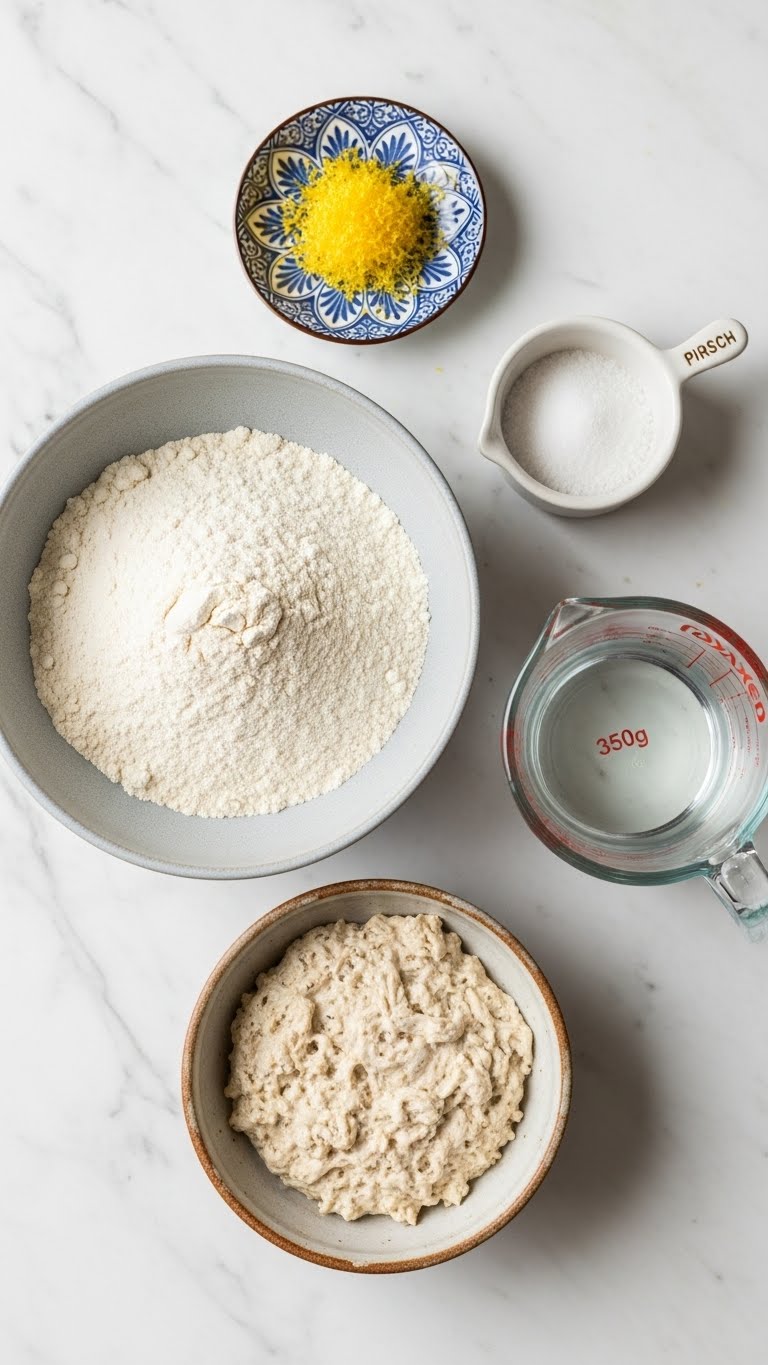
- Ingredients:
- 500 g bread flour
- 350 g water (70% hydration)
- 100 g active sourdough starter
- 10 g salt
- Zest of 1 medium lemon (about 1–1.5 teaspoons finely grated)
- Tools:
- Microplane zester, bowl, Dutch oven or baking stone, bench scraper
- Why such a small amount? Too much zest increases bitterness; 1 teaspoon per 500 g flour gives bright citrus without harsh pith. Fresh lemons work best—avoid waxed fruit unless scrubbed.
Preparing the Lemon and Starter (how to prep zest to avoid bitterness)

- Use a microplane and only grate the yellow outer skin. Avoid the white pith—it’s bitter.
- Zest just before you mix it in to preserve volatile oils (aroma) and prevent oxidation.
- Optional: For a milder, floral note, briefly toss the zest with 10 g sugar or 1 tsp oil to macerate. This tames sharpness without masking citrus.
- If your starter is very acidic, feed it 6–8 hours before use so acidity drops slightly; this helps prevent the final loaf from tasting overly sour when combined with citrus.
Step-by-Step: Add Lemon Zest to Sourdough Without Making It Bitter
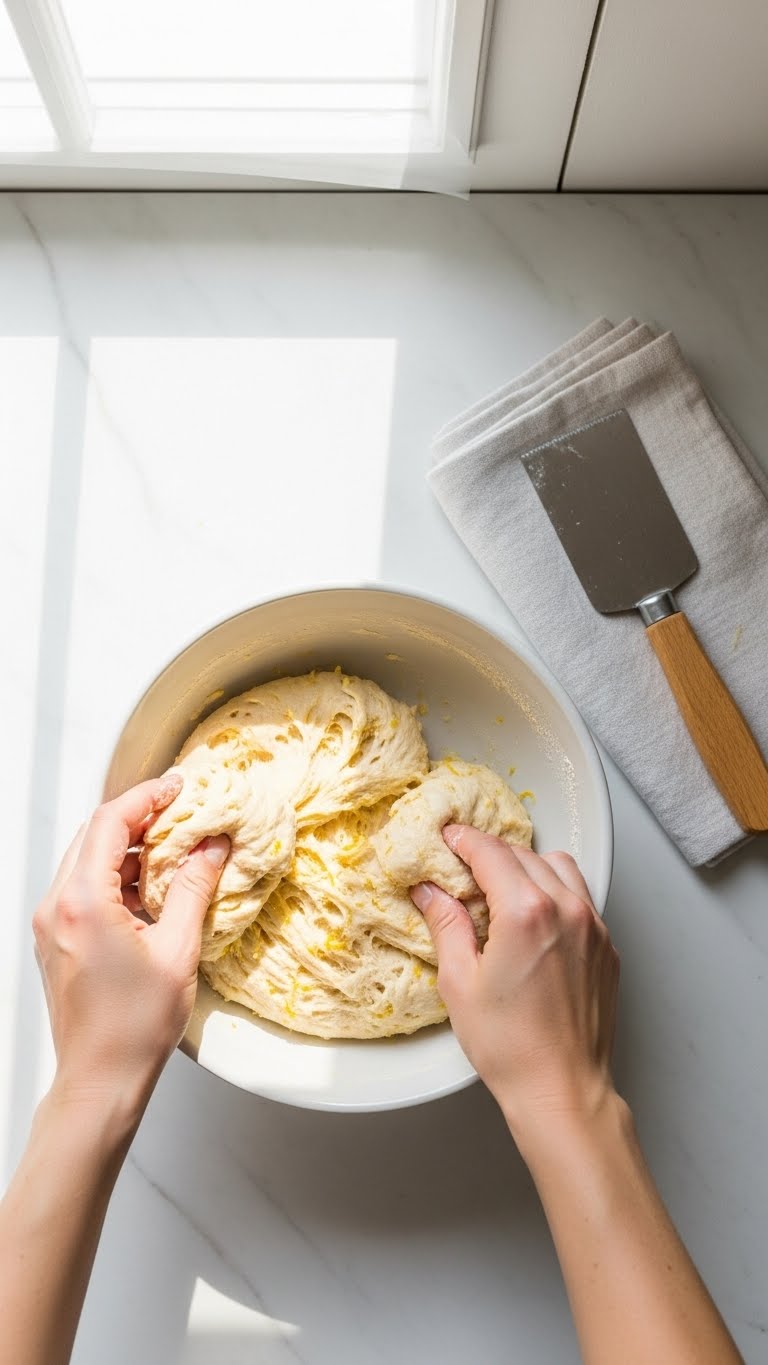
- Autolyse (20–40 minutes): Mix 500 g flour and 350 g water until no dry flour remains. Rest.
- Add starter & salt: Add 100 g active starter after autolyse; mix. Add 10 g salt and fold.
- Add zest during bulk fermentation: After the first set of stretch-and-folds (roughly 30–60 minutes in), sprinkle the zest of 1 lemon evenly over the dough and do a gentle fold. This distributes oils without overworking.
- Bulk fermentation total: 3–5 hours at room temp, depending on starter strength.
- Shape and proof: Shape, then cold-proof in the fridge 8–12 hours for extra flavor control.
- Bake: Score and bake in a preheated Dutch oven at 230°C/450°F for 20 minutes covered, then 20–25 minutes uncovered until deep golden.
Tips:
- Start with 1 teaspoon zest; increase to 1.5 tsp only after testing.
- Add zest after some fermentation so dough acidity is moderated.
Warning: Grating pith or using dried zest can create bitterness. Always taste a small bit of fresh zest raw if unsure.
Troubleshooting, Storage, and Creative Variations

- Problem: Bitter flavor — Reduce zest to ½ teaspoon next bake; ensure no pith was included.
- Problem: Weak lemon aroma — Add zest in two stages: half during bulk, half at final shaping.
- Storage: Cool completely, then store in a paper bag for 2 days or freeze slices for up to 1 month. Lemon aroma fades faster, so enjoy within 48 hours for best citrus notes.
- Variations:
- Mix 1 tbsp poppy seeds with the zest for lemon-poppy sourdough.
- Replace lemon with orange zest (same rules apply).
- For a savory twist, fold in 1 tbsp grated Parmesan at shaping.
Pro trick: Brush the crust with a light lemon-infused oil after baking for a subtle glossy citrus finish that won’t add bitterness.
You now know how to add lemon zest to sourdough without making it bitter, with exact timings, measurements, and fixes. Try the method with 1 teaspoon zest the first time and adjust from there. Pin this guide for your next bake and save the recipe—then share it with friends who love bright, tangy bread. Which tip will you try first? Ready to make this happen? Let's do it!