
You love a good recipe, but you want to use your sourdough starter instead of instant yeast or discard. Converting recipes to use sourdough starter is easier than you think, and it gives baked goods depth and tang. In this guide you’ll learn how to convert any recipe to use sourdough starter, step-by-step, with clear math, timing, and troubleshooting.
Follow these steps and you’ll be able to convert any recipe to use sourdough starter with confidence and predictable results.
What You'll Need (ingredients + tools)
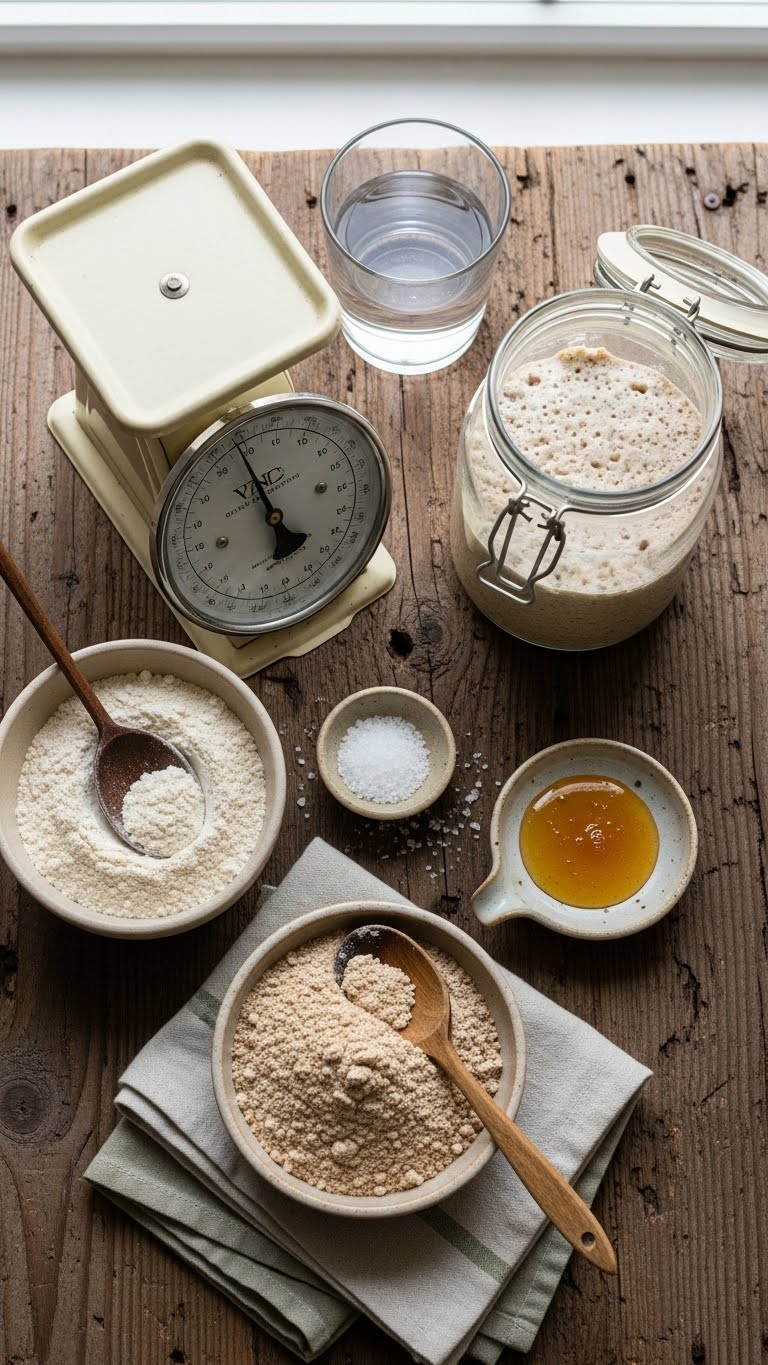
Start with a reliable 100% hydration sourdough starter (equal parts flour and water by weight). You’ll also need:
- Digital kitchen scale (recommended)
- Measuring cups and spoons
- Mixing bowl and bench scraper
- Recipe you want to convert (flour and water weights preferred)
Quick checklist:
- If your recipe lists cups, weigh the flour—1 cup all-purpose ≈ 120g.
- Confirm your starter hydration. If it’s not 100% hydration, note that in your calculations.
Prepare Your Starter & Ingredients
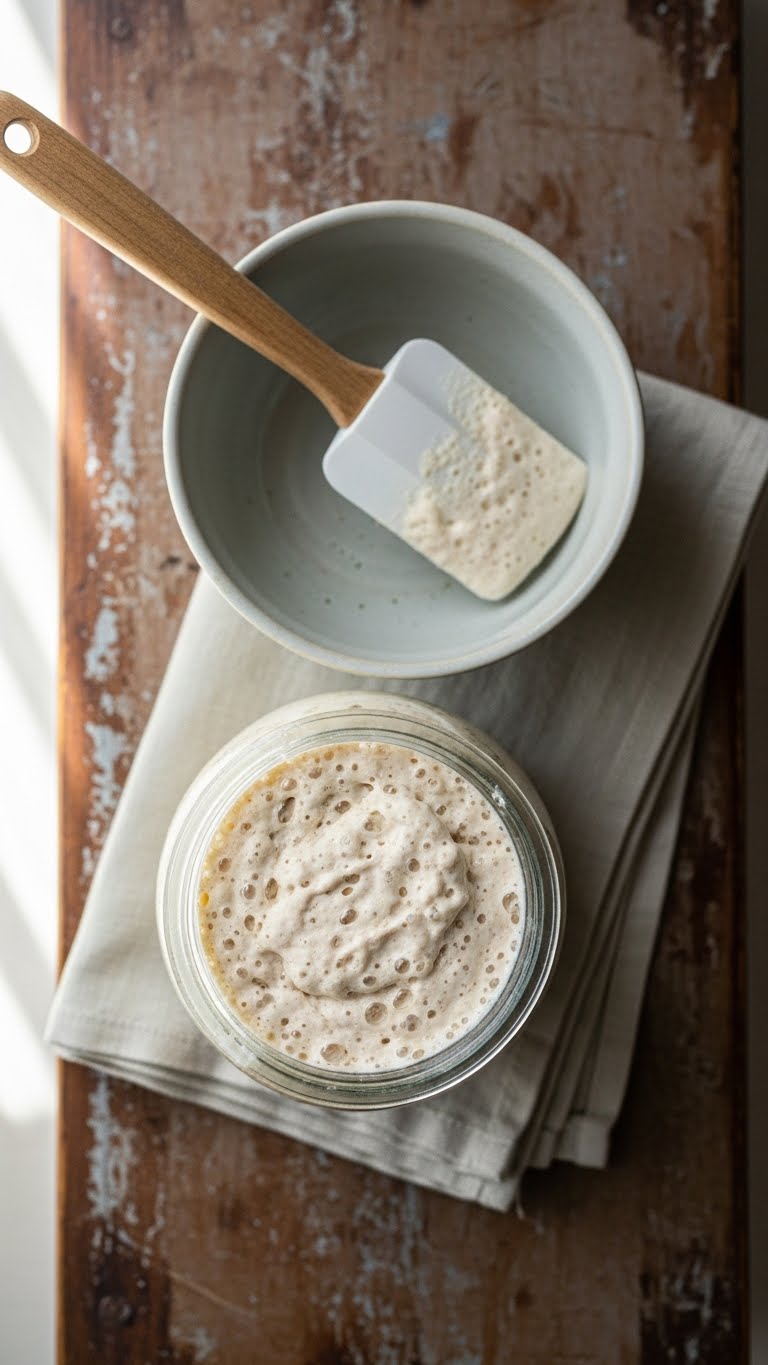
Feed your starter 4–12 hours before use so it’s at peak activity. Look for:
- Bubbles, volume rise, and a pleasant tangy aroma.
- A consistency like thick pancake batter for 100% hydration.
Pro tips:
- Use discard for pancakes or crackers, but use an active starter for leavened breads and most pastries.
- If short on time, let a fed starter sit at a warm spot for 4 hours to peak.
Step-by-Step Conversion Method
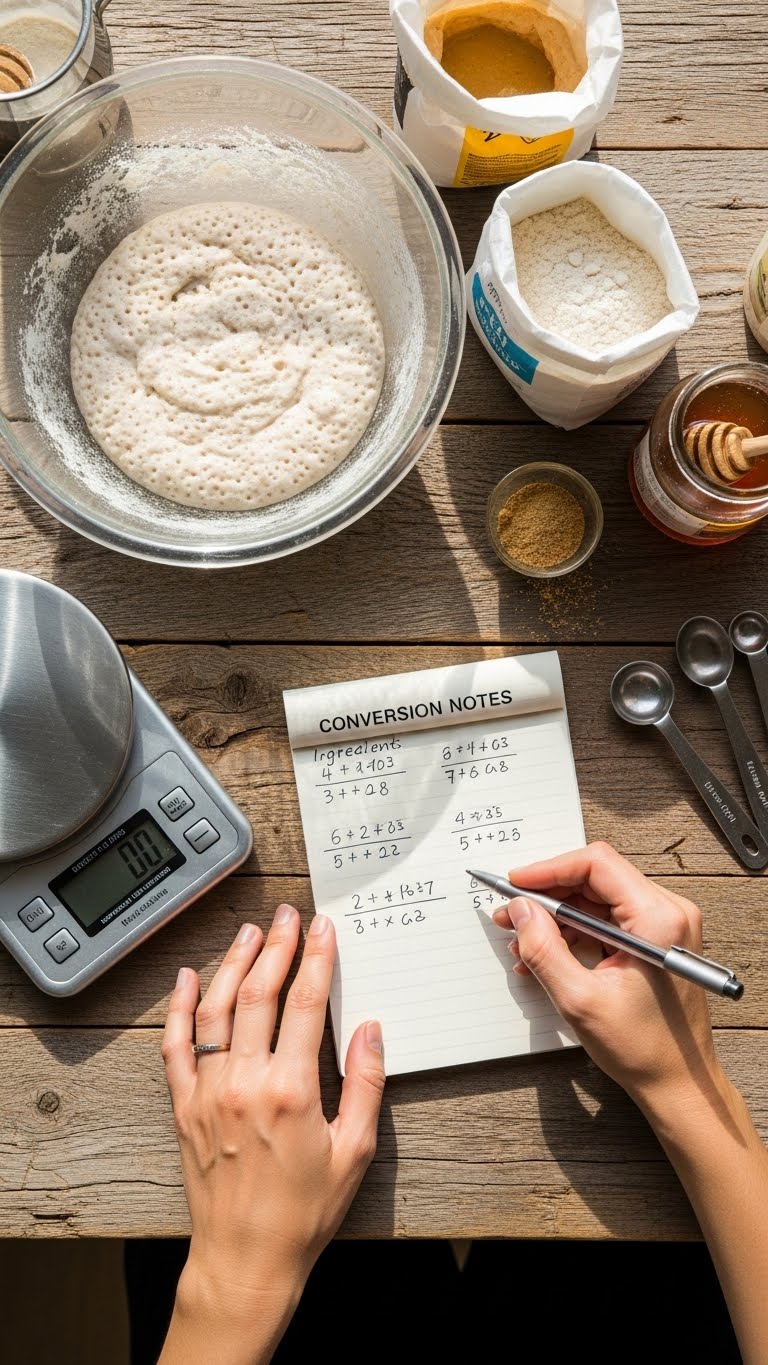
Follow this simple formula to convert any recipe to use sourdough starter:
- Determine the recipe’s total flour weight. If the recipe uses cups, convert to grams.
- Choose the starter percentage you want to use (by flour weight). Common choices:
- 10–20% for mild flavor, shorter fermentation
- 20–30% for pronounced sourdough flavor
- 30–50% for very tangy results and longer fermentation
- Calculate starter weight: Starter = Total flour × Starter%.
- Subtract starter contributions from the recipe:
- For 100% hydration starter, half the starter weight is flour and half is water.
- New flour = Original flour − (Starter ÷ 2)
- New water = Original water − (Starter ÷ 2)
Example: Original recipe has 500g flour and 350g water. You pick 30% starter.
- Starter weight = 500 × 0.30 = 150g starter
- Starter provides 75g flour + 75g water
- New flour = 500 − 75 = 425g
- New water = 350 − 75 = 275g
Practical steps:
- Mix starter with new water first to distribute it evenly.
- Add flour and salt, then follow the original mixing and proofing steps.
- Expect longer bulk fermentation—4–12 hours at room temp or overnight in fridge.
Warnings and quick fixes:
- If dough looks too wet, add 10–20g flour at a time.
- If too dry, add 10–20g water at a time.
- If you're short on time, increase starter to 40–50% and use warmer temps, but watch for overproofing.
Troubleshooting Common Issues & Storage Tips
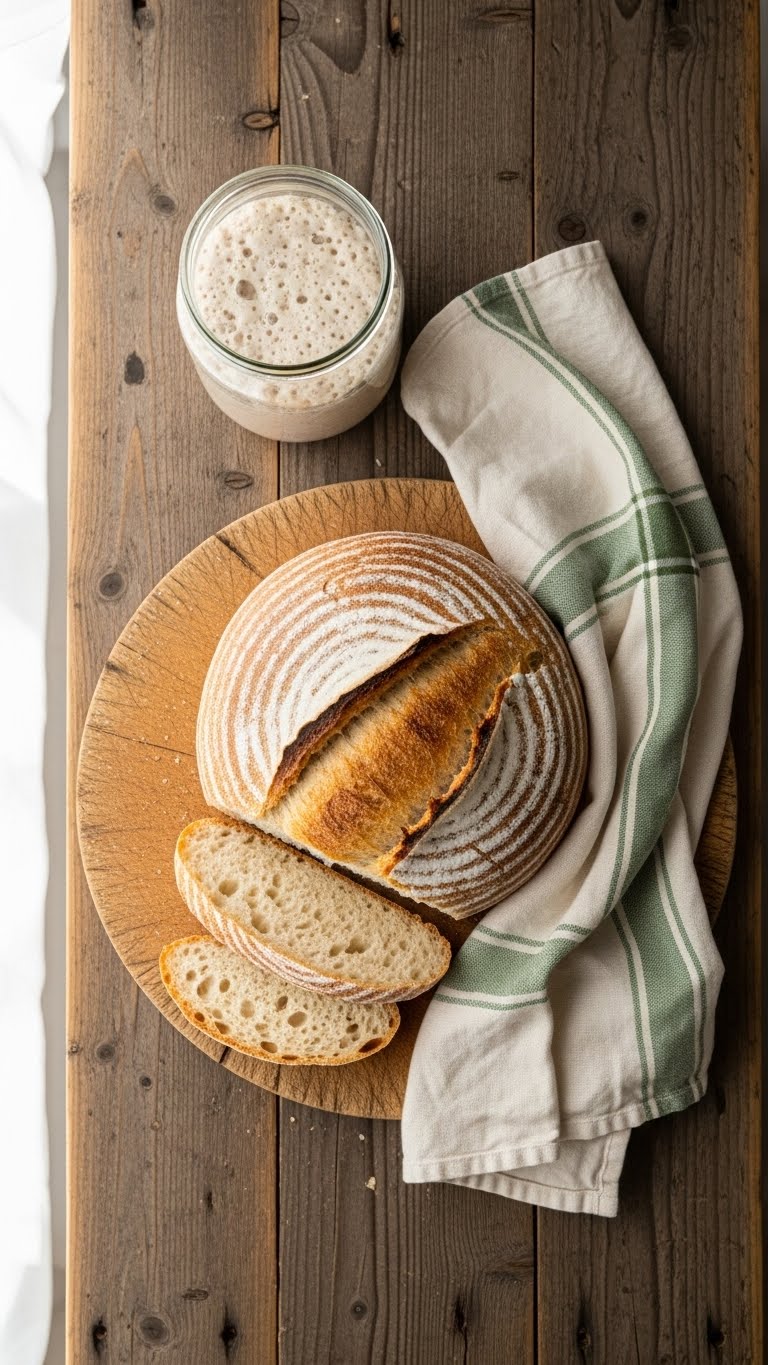
Common problems and fixes:
- Underproofed dough: dough feels tight and dense. Let it rest longer at room temp or retard in the fridge for 6–12 hours.
- Overproofed dough: dough collapses. Shape gently and bake; consider shorter proof next time.
- Weak rise: starter may be underfed—feed 2–3 times before using or use a warmer spot to activate.
Storage and make-ahead:
- Store starter in the fridge and feed weekly if not baking often.
- Baked goods keep 2–3 days at room temp in a cloth bag, or freeze for up to 3 months.
- You can make dough ahead and refrigerate for 12–48 hours for deeper flavor.
You now have the math, timings, and tips to convert any recipe to use sourdough starter. Try converting a simple bread or muffin recipe first to build confidence.
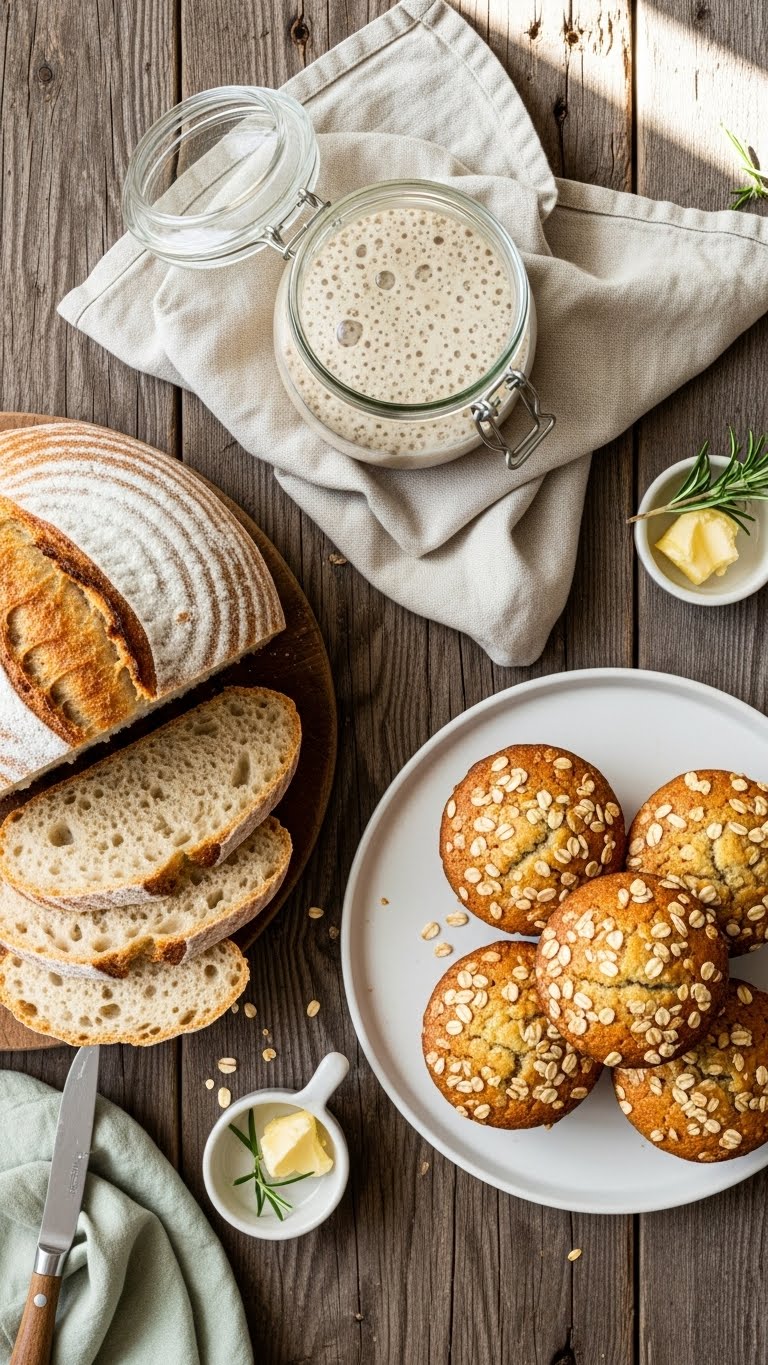
You’ve just learned a clear method to convert any recipe to use sourdough starter and why the math matters. Pin this guide for your next baking session and save the conversion formula. Which recipe will you convert first—bread, pancakes, or muffins? Ready to make this happen? Let's do it!