
You love your sourdough but want a nuttier, heartier starter. Converting your sourdough starter to whole wheat gives you more flavor, faster fermentation, and better oven spring for rustic breads. This guide shows you how to convert your sourdough starter to whole wheat in clear steps, with exact feeding ratios, a simple schedule, and troubleshooting tips so you can start baking with confidence.
Follow these steps and you'll have a stable whole wheat starter in as little as 48–72 hours, depending on temperature and activity.
What You'll Need (ingredients + tools)
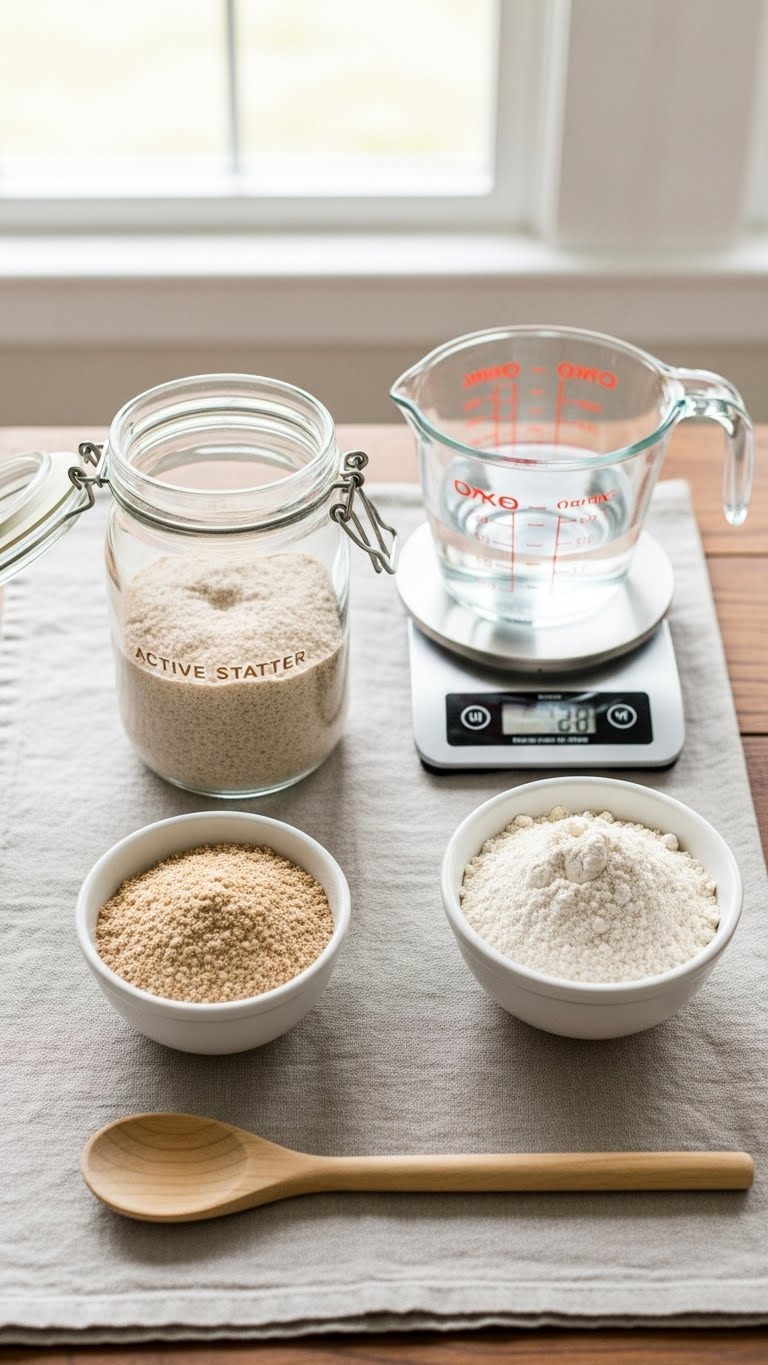
- Active sourdough starter (50–100 g)
- Whole wheat flour (fresh, stone-ground if possible)
- Lukewarm water (about 25–30°C / 77–86°F)
- Digital scale, jar with lid, wooden spoon
- Optional: glass scraper, thermometer
Quick tips:
- Use equal-weight feeding for a 100% hydration starter (starter : flour : water = 1:1:1).
- If your starter is sluggish, a warmer spot (around 25°C / 77°F) helps.
Getting Started: Reset, Discard, and First Feed
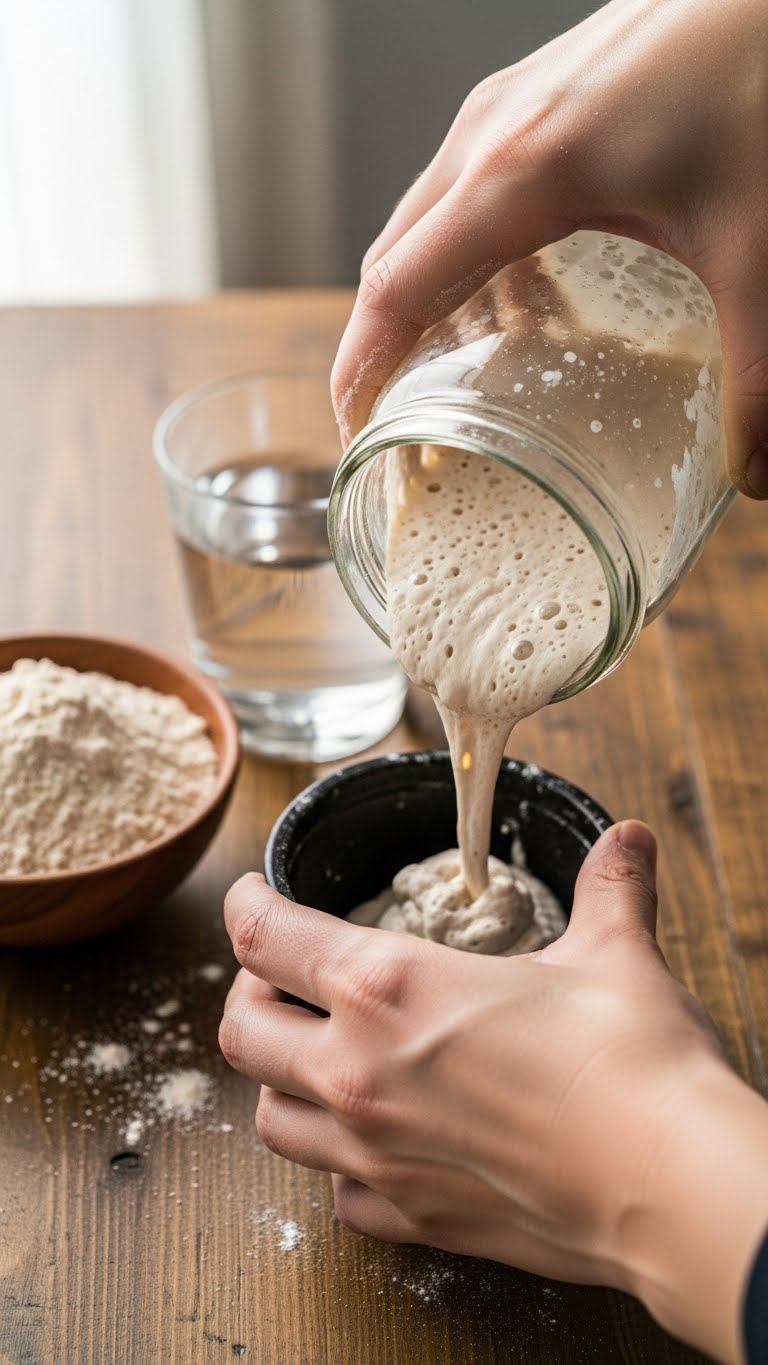
- Step 1: Discard down to 20–25 g of starter; this refreshes yeast population and reduces acidity.
- Step 2: Feed with whole wheat using equal weights: e.g., 20 g starter + 20 g whole wheat flour + 20 g water.
- Step 3: Stir until smooth, loosely cover, and place in a warm spot.
Timing:
- If your starter is active, feed every 12 hours.
- If slow, feed every 8–12 hours and warm the jar slightly.
Why equal-weight matters: it keeps hydration consistent so you can judge rise times and bubble activity clearly.
Step-by-Step Conversion: Gradual and Direct Methods
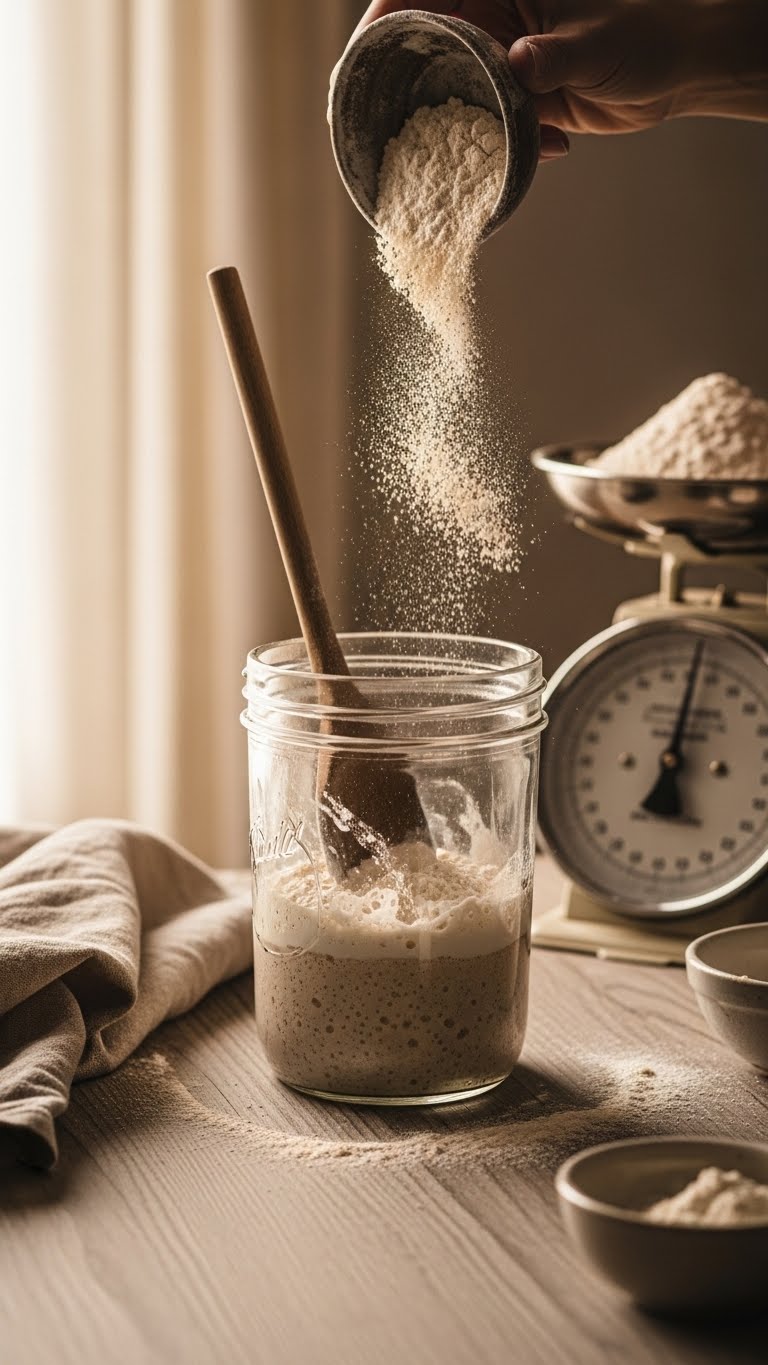
Choose one approach:
A. Gradual swap (gentle)
- Day 1: Replace 25–50% of flour with whole wheat (feed 20–50 g whole wheat).
- Repeat every 12 hours for 2–3 feeds, increasing whole wheat portion each time.
- By feed 4–6, use 100% whole wheat.
B. Direct swap (faster)
- Discard to 20–25 g starter.
- Feed 20 g starter + 20 g whole wheat flour + 20 g water.
- Repeat every 12 hours for 3–5 feeds until the starter doubles reliably.
What to watch for:
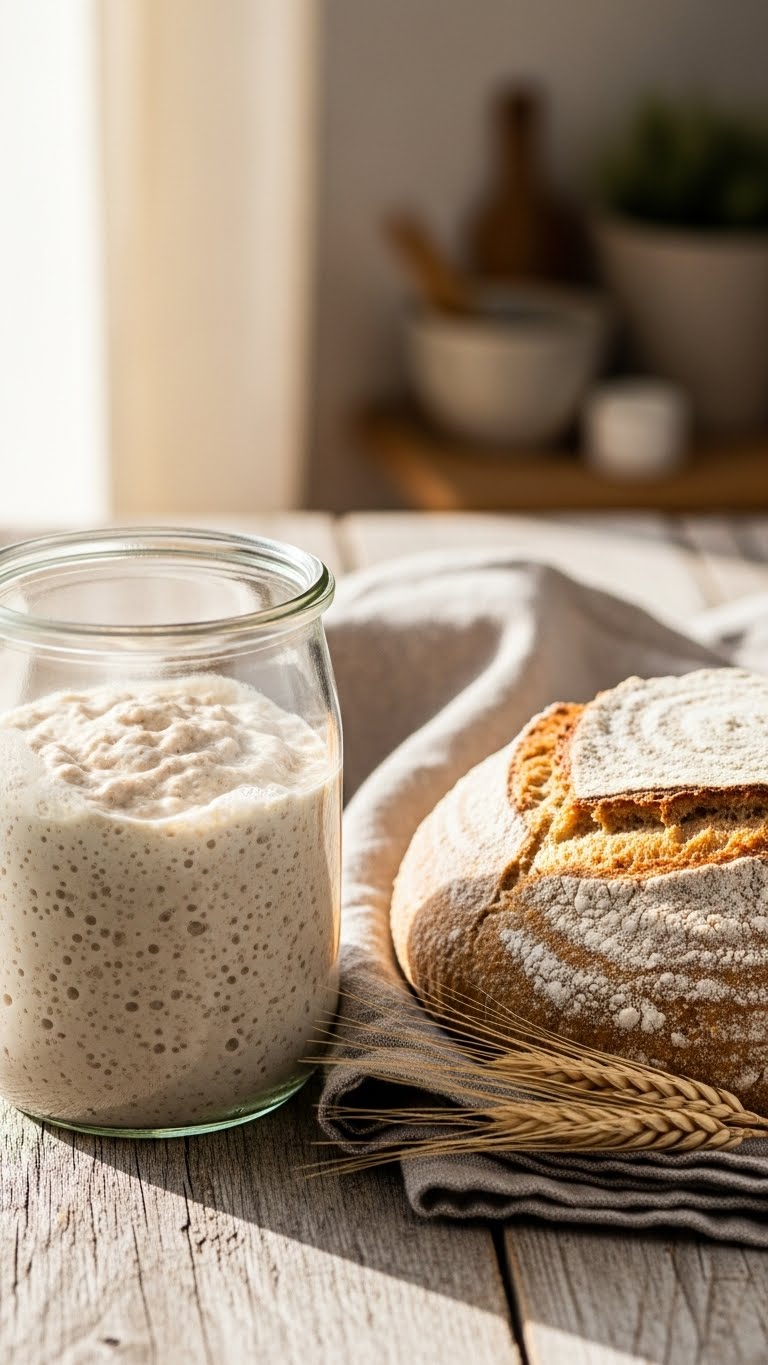
- Look for consistent doubling within 4–8 hours after a feed.
- Expect a tangier, nuttier aroma within 1–2 days.
- Whole wheat absorbs more water; maintain equal-weight feeding to keep a batter-like consistency.
Pro trick: If starter gets too thick, add 5–10 g extra water per feed.
Troubleshooting Common Issues & Storage
Troubles:
- No bubbles after 48 hours: increase temperature to 25–27°C, feed more frequently.
- Hooch (dark liquid): stir back in or discard and feed; reduce time between feeds.
- Sour or sharp smell: give a couple of fresh whole wheat feeds; discard excess.
Storage & maintenance:
- For daily baking: keep at room temperature, feed every 12–24 hours.
- For occasional baking: refrigerate and feed once per week. Refresh with 2–3 room-temp feeds before baking.
- To build quantity: use a 1:5:5 feeding ratio (starter:flour:water) and feed every 6–8 hours until active.
Safety note: If you see fuzzy mold (pink, orange, black), discard the starter and start fresh.
You’ll know the conversion worked when your starter reliably doubles and shows lots of bubbles within a predictable time window. That means it’s ready for whole wheat loaves, flatbreads, and pancakes.
Enjoy the deeper flavor and stronger fermentation that come from your whole wheat starter. Pin this guide for your next baking session and share with friends who want richer sourdough results. Which tip will you try first — gradual swap or direct swap? Ready to make this happen? Let's do it!