
You’ve fed your starter, waited, and now you’re staring at jars wondering if your sourdough starter is ready to bake. It’s a common moment of doubt for home bakers. When your sourdough starter is ready to bake, you’ll spot clear, repeatable signs you can rely on — not guesswork.
This guide shows exactly how to tell when your sourdough starter is ready to bake, gives quick tests you can do in minutes, and explains what to do if it’s not quite there. Read on and you’ll feel confident feeding, testing, and using your starter today.
What You'll Need to Know if Your Sourdough Starter Is Ready to Bake
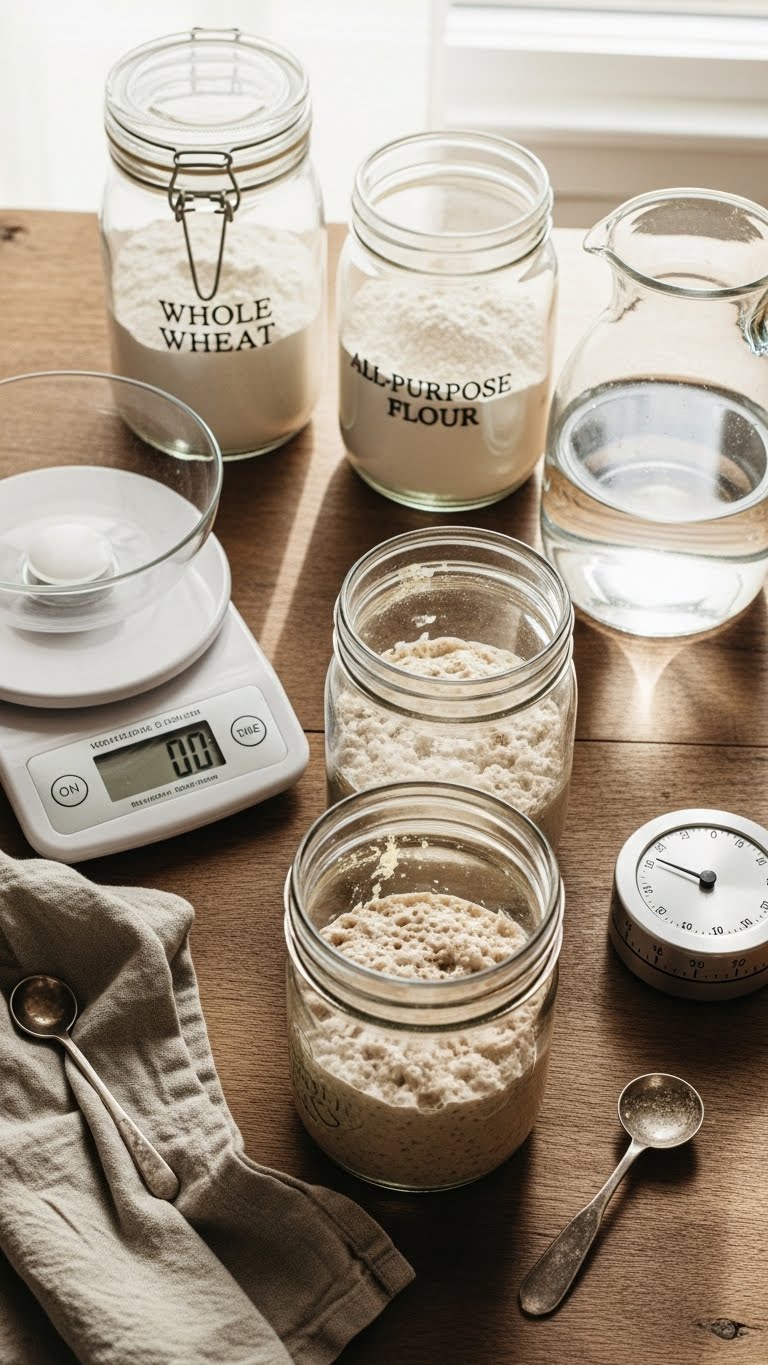
Before testing, gather simple tools so you can check starter activity quickly.
- Digital scale (accurate to ±1 g)
- Clean jar with 2–3× volume free space
- Room-temperature water and the flour you normally feed with
- A spoon or chopstick to mark rise
- Timer
Quick facts to remember:
- Feed at a 1:1 ratio by weight (starter:flour + water) for a slower schedule, or 1:2:2 (starter:flour:water) for a stronger rise.
- Temperature affects timing: at 25–28°C (77–82°F) activity is faster.
- Expect 4–12 hours for a strong feed to peak, depending on your starter and room temp.
How to Tell If Your Starter Is Active and Ready

Look for these reliable visual and smell cues to know your sourdough starter is ready to bake.
- Bubbles throughout the jar (not just at the top).
- Doubled or more in volume after feeding — use a mark on the jar.
- Domed surface at peak, sometimes with small craters.
- Pleasant, tangy aroma — slightly fruity or yeasty, not rotten.
Quick tests:
- The float test: drop 1 tsp of starter in room-temperature water. If it floats, it’s aerated and likely ready. Note: this isn’t foolproof but helps confirm activity.
- The poke test: gently press the domed starter. If it springs back slowly and leaves a small dent, it’s near peak.
Use the phrase “sourdough starter is ready to bake” as a checklist: bubbles + doubled volume + right aroma = your sourdough starter is ready to bake.
Step-by-Step: Test and Use Your Starter Before Baking
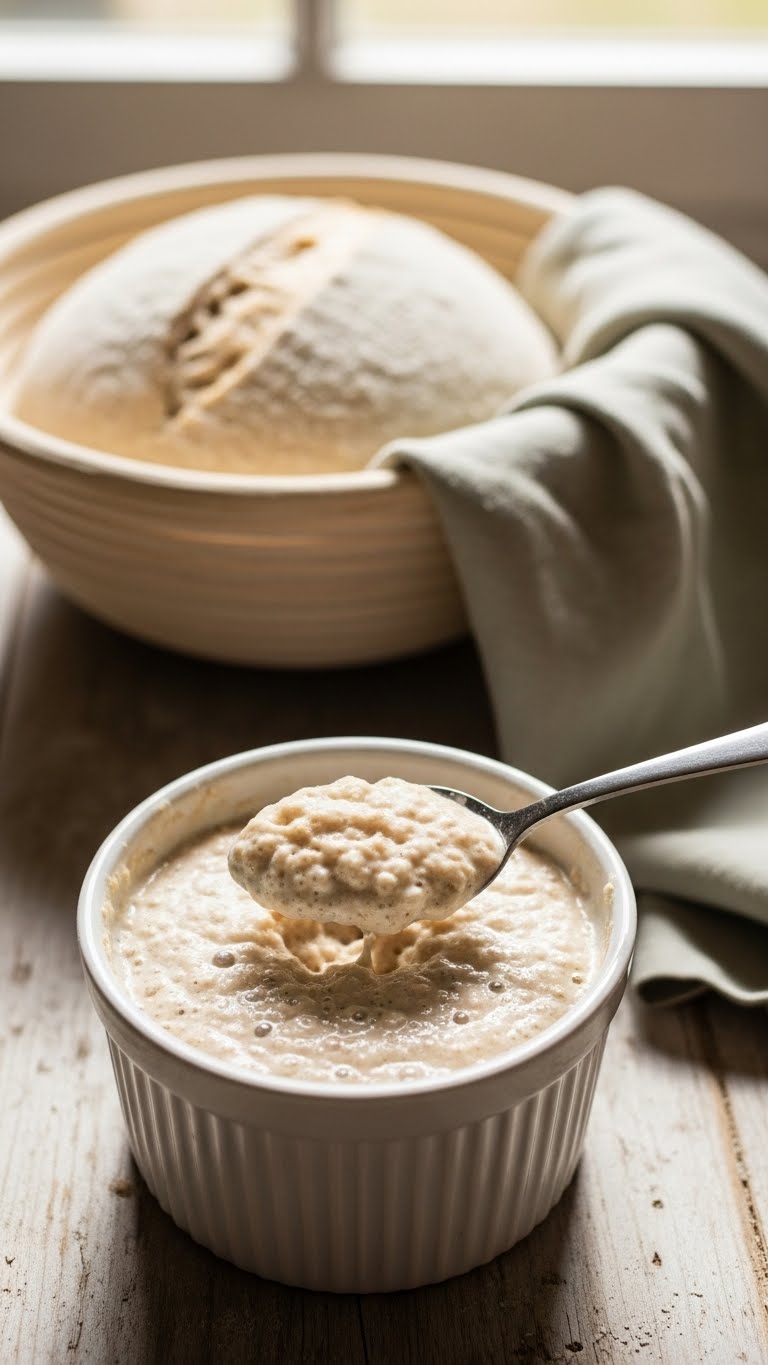
Follow these steps to move from fed starter to dough confidently.
- Feed your starter at your chosen ratio. Record time.
- Mark the jar and set in a warm spot. Start timing.
- Check at 4-hour intervals. Look for doubling and doming.
- When it peaks, perform the float test (optional).
- Use ½–1 cup (120–240 g) of mature starter for most loaf recipes, adjusting hydration accordingly.
Baker’s tips:
- If it peaks too fast, chill the fed starter in the fridge to slow fermentation.
- If it hasn’t shown activity by 12 hours, repeat a feed at 1:1:1 and give another 4–8 hours.
- For consistent results, weigh starter and flour instead of using volume.
Troubleshooting: If Your Starter Isn’t Ready to Bake
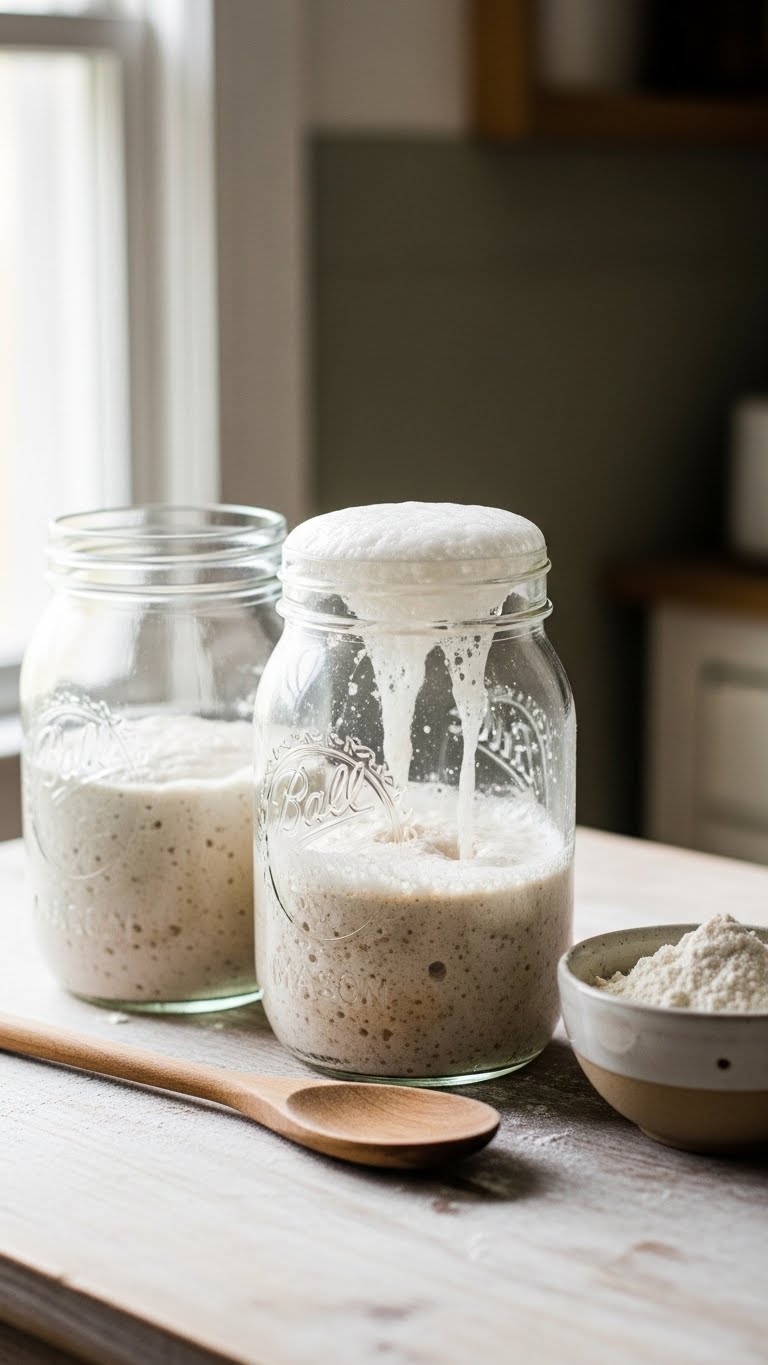
If your sourdough starter is not ready to bake, try these fixes.
- Slow activity:
- Feed at 1:2:2 (starter:flour:water) twice in 24 hours.
- Move to a warmer spot (25°C/77°F).
- Unpleasant smell (vinegar/cheesy):
- Discard most starter and refresh with 1:1 by weight for 2–3 feeds.
- No bubbles after multiple feeds:
- Switch some flour to whole grain for extra nutrients.
- Use filtered water if your tap is heavily chlorinated.
Warnings:
- If starter shows pink, orange, or fuzzy mold, discard it and start over.
- Don’t assume float test alone proves readiness — use it with visual cues.
You’ll know your sourdough starter is ready to bake when it meets multiple checks: active bubbles, rising reliably, a pleasant tang, and a successful poke/float test. That combination gives you the best shot at a strong first rise in your dough.
You’ve got this — your next loaf could be days away or today if your starter is peaking. Pin this guide for your baking day, save these quick tests, and share with a friend who’s learning sourdough. Which test will you try first?