
You want flaky, layered sourdough without baking school fuss. Laminate sourdough dough for flaky layers and you'll add visible, tender layers that lift and crisp in the oven. Laminate sourdough dough is a simple folding technique that sandwiches butter into your dough to create that pull-apart texture. In this guide you’ll learn the materials, exact timings, and step-by-step lamination so you can start practicing immediately.
What You'll Need (ingredients + tools for laminating sourdough dough)
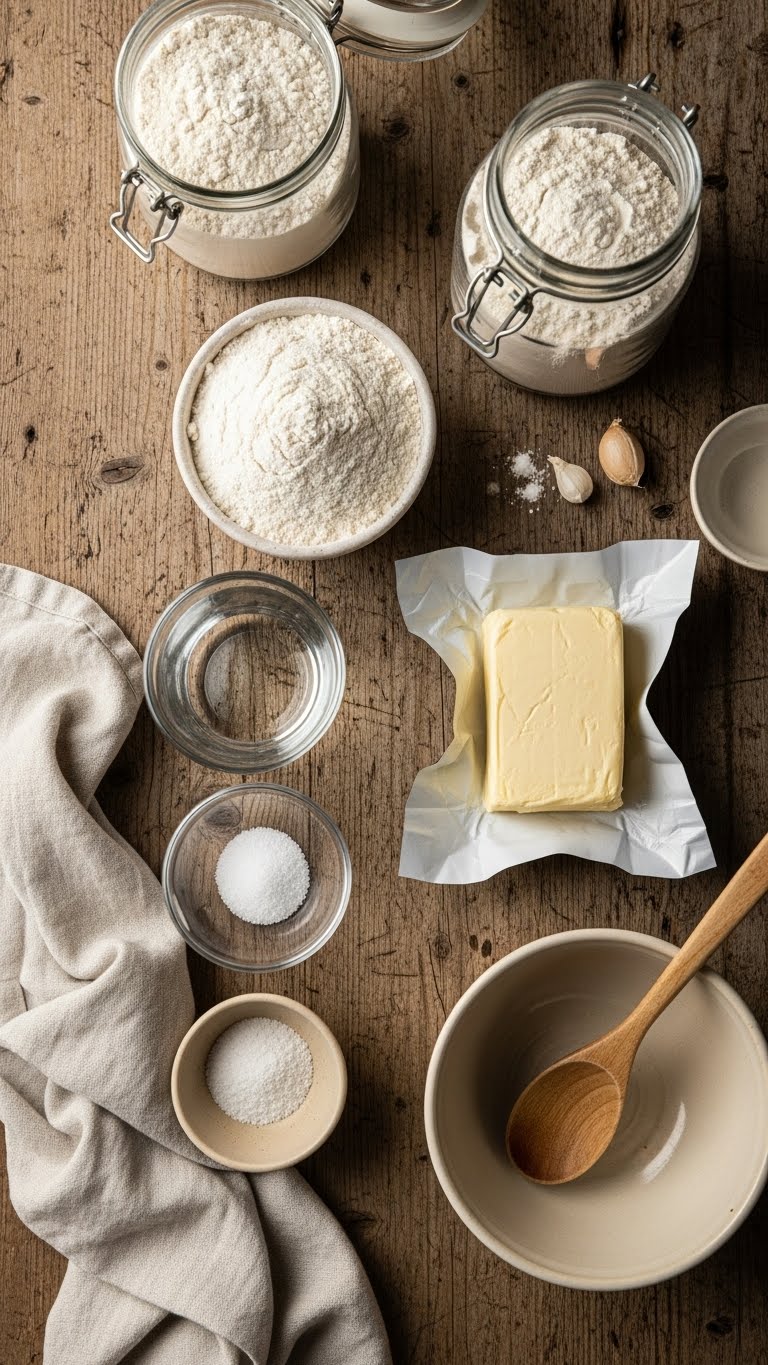
- Ingredients (for one loaf):
- 500 g bread flour
- 350 g water (70% hydration)
- 100 g active sourdough starter (fed, bubbly)
- 10 g salt
- 200 g cold butter (for lamination; see options)
- Tools:
- Bench scraper, rolling pin, pastry brush
- Ruler or mat, plastic wrap, pastry board or wood surface
- Quick tips:
- Use unsalted butter or lightly salted if preferred.
- Chill the butter to firm but still pliable (cold, not rock hard).
- Work in a cool room to keep butter from melting.
Getting Started: Prepare dough and butter to laminate sourdough dough

Before you laminate sourdough dough, build a relaxed dough. Mix flour and water and autolyse for 30–45 minutes. Add starter and salt, then perform a few stretch-and-folds over 2 hours until dough feels cohesive. You want a tacky, extensible dough that will hold butter layers.
Prepare the butter:
- Shape 200 g of cold butter into a flat rectangle about 15 x 10 cm between parchment.
- Chill until firm but bendable (about 15 minutes) so it won’t tear the dough.
- Pro trick: If your kitchen is warm, work on a cooled marble or chill your board briefly.
Laminating Sourdough Dough: Step-by-step technique for flaky layers
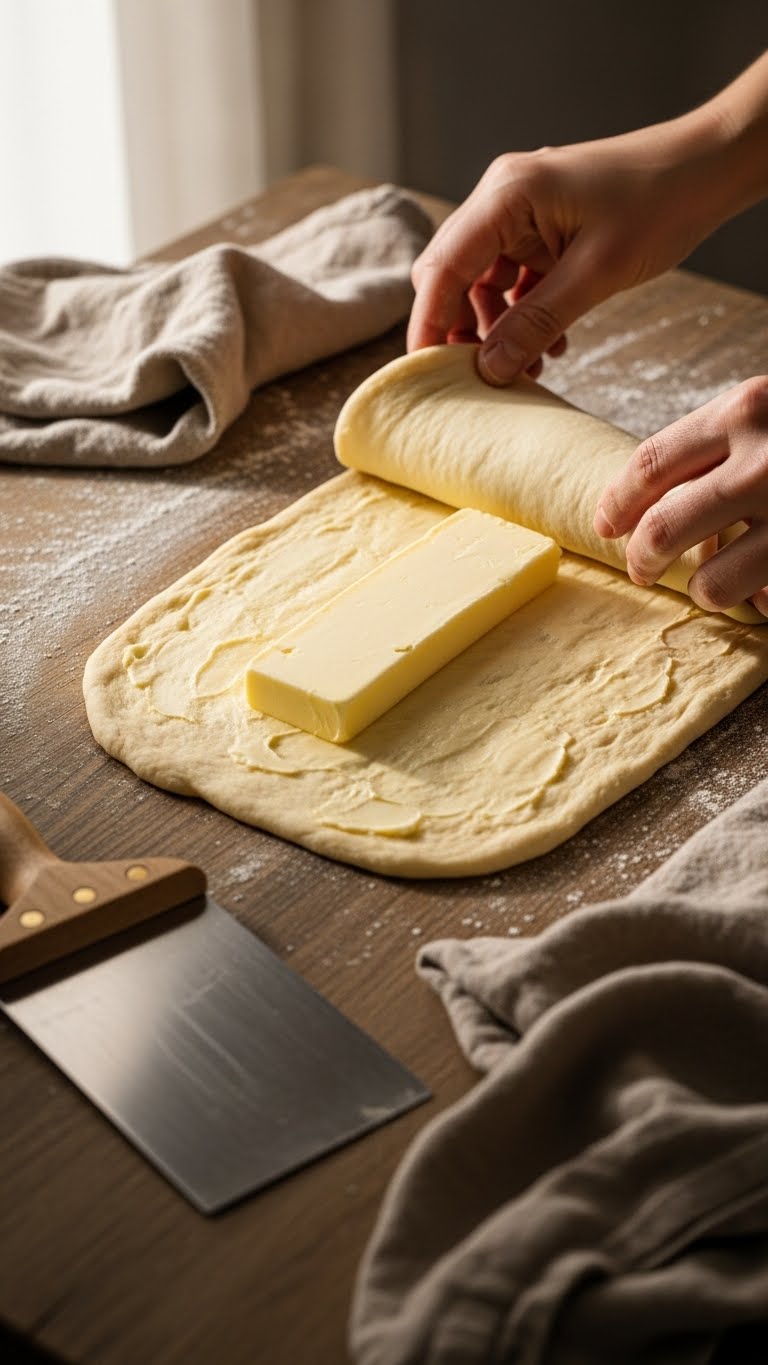
Follow these numbered steps to laminate sourdough dough and create clear layers:
- Roll or gently pat dough into a 25 x 30 cm rectangle. Keep edges even.
- Place the chilled butter block centered on the lower two-thirds of dough.
- Fold the top third of unbuttered dough over the butter, then fold the bottom third up (a letter fold). Seal edges.
- Rotate dough 90°. Roll gently to 25 x 30 cm again — don’t press too hard or butter will smear.
- Perform a second letter fold. Wrap and chill 30–45 minutes.
- Repeat a third time if you want more layers. Chill between folds to keep butter firm.
Bullet tips:
- Use light, even pressure when rolling; strong pressure breaks layers.
- If butter leaks, chill the dough 15–30 minutes and continue.
- For fewer layers, do only two folds; for a croissant-like texture, three folds is ideal.
Troubleshooting common lamination issues and variations
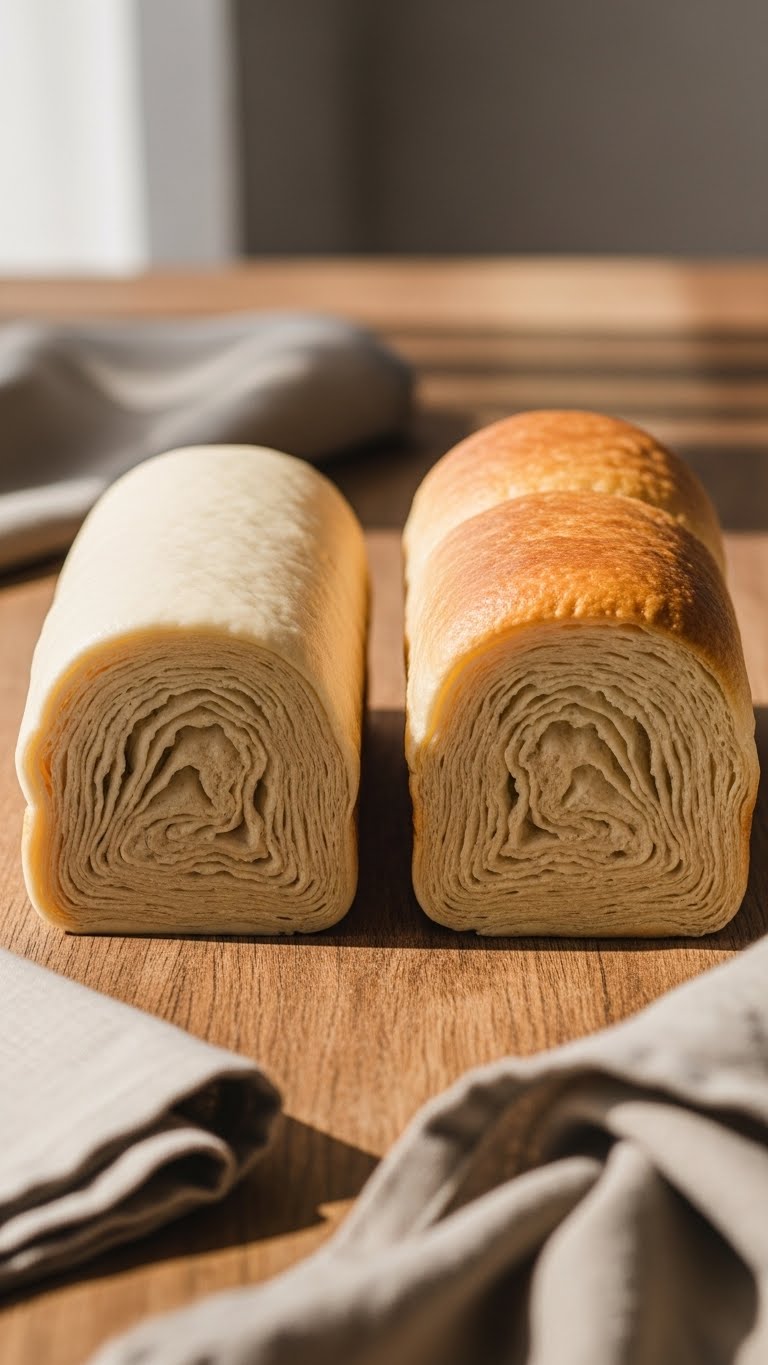
Common problems and fixes:
- Butter melting into dough: Chill the dough longer between folds and work faster.
- Uneven layers: Keep dough and butter similar temperatures and roll from center outward.
- Dough tearing: Let dough rest 10–15 minutes to relax gluten before rolling.
Variations and shortcuts:
- Use 75 g of softened butter mixed with herbs for savory twists.
- For a quicker method, do a single fold and press, chill, then shape — you’ll get some layers but less dramatic lift.
- Make-ahead: After final fold, wrap and refrigerate up to 24 hours, or freeze for 1 month.
Serving and baking tips:
- Shape and final proof on a floured linen for an even crust.
- Bake at 230°C / 450°F with steam for the first 15 minutes, then reduce to 200°C / 400°F.
- Look for a deep golden crust and audible hollow sound when tapped.
You’ve now learned how to laminate sourdough dough for flaky layers with exact steps and troubleshooting tips. Pin this guide for your next baking day and try the three-fold method to see clear, buttery layers. Which folding tip will you try first — extra chill time or a third fold? Save this for later and share with a friend who loves bread baking!