
You love the flavor and health benefits of whole wheat sourdough, but every loaf turns out dense and heavy. You’re not alone — whole wheat needs different handling than white flour. This guide shows you exactly how to make whole wheat sourdough that's not dense, with simple timing, hydration, and folding tips you can use right away.
You’ll learn what to mix, when to fold, and how to proof for open crumb. Follow these steps and you’ll have a lighter, springy loaf that still tastes full and nutty.
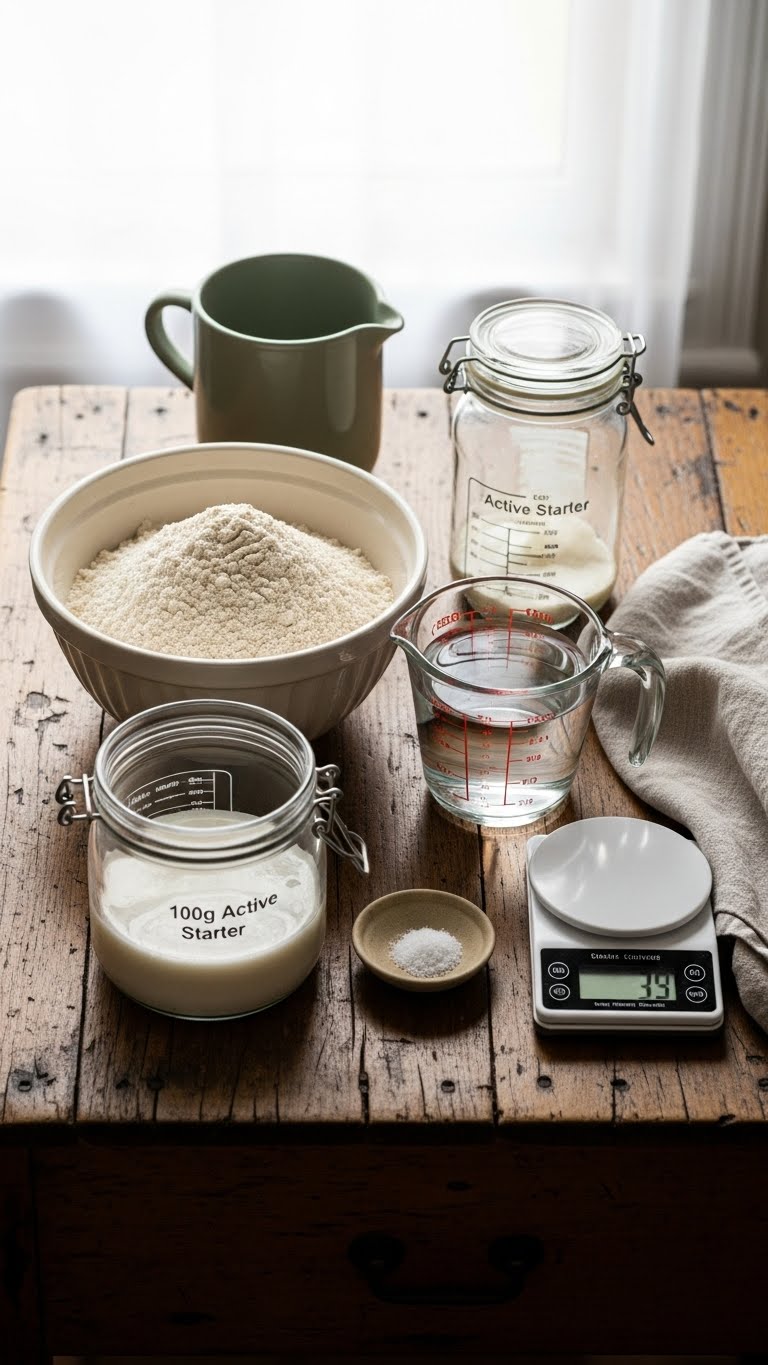
What You'll Need (ingredients + tools)
-
Ingredients:
- 500g whole wheat flour
- 350g water (70% hydration), room temperature
- 100g active sourdough starter (fed 4–8 hours before)
- 10g fine sea salt
-
Tools:
- Digital scale, mixing bowl, bench scraper
- Banneton or bowl lined with linen
- Dutch oven or baking stone and a tray for steam
Tip: If your starter is sluggish, feed it twice before use. A lively starter gives a lighter crumb.
Preparing Your Ingredients
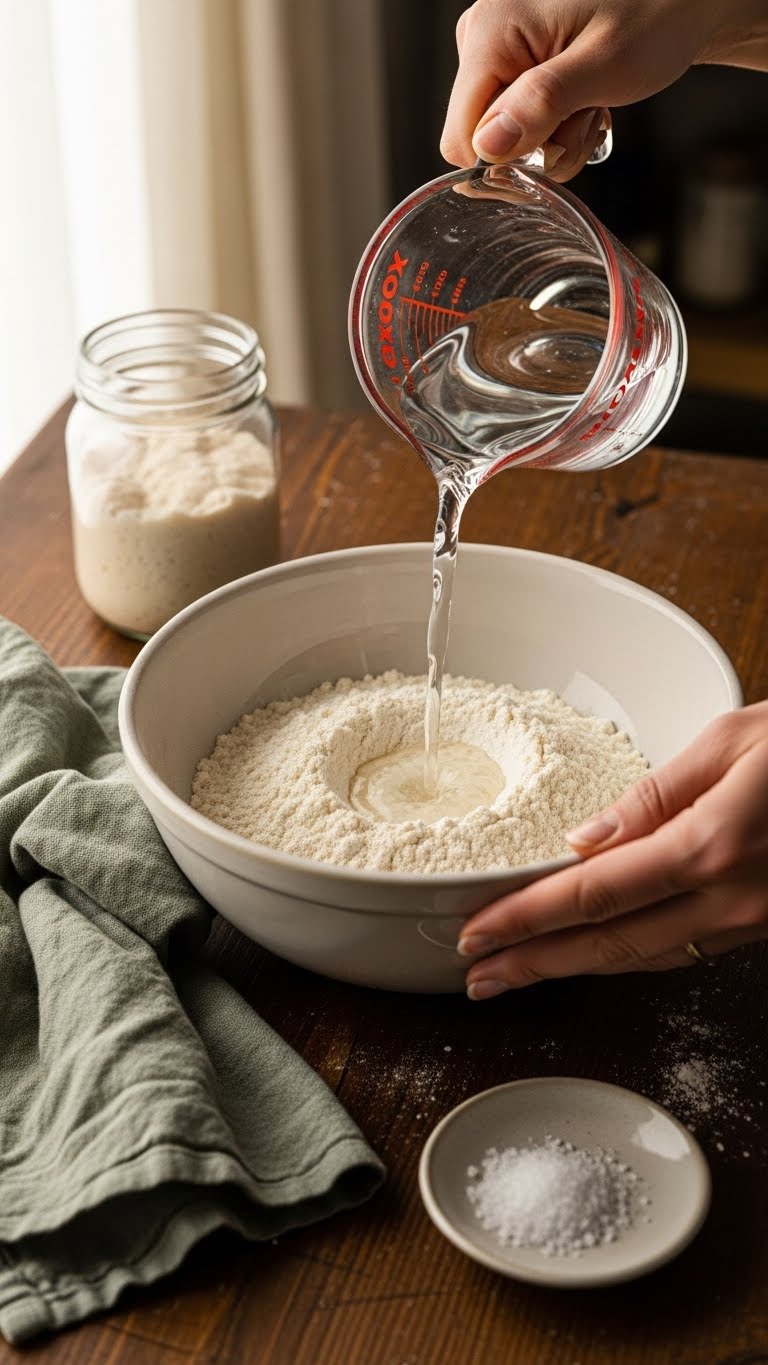
- Autolyse (mix flour + water): Combine 500g whole wheat and 350g water until no dry bits remain. Cover and rest 30–60 minutes.
- This hydrates the bran and reduces gluten tearing.
- Add starter and salt: Sprinkle 10g salt, add 100g active starter, then mix until incorporated.
- Texture check: Dough should feel tacky but not sticky. Add up to 10–20g extra water if it clings to your hands.
Pro tip: Longer autolyse (up to 90 minutes) softens whole wheat bran and lightens texture.
Step-by-Step Instructions for How to Make Whole Wheat Sourdough That's Not Dense

- Bulk fermentation:
- Do 4 sets of stretch-and-folds, spaced 30 minutes apart (total folding time ~1.5–2 hours).
- Let dough rest until it increases about 30–40% and shows bubbles, about 3–4 hours at room temp.
- Pre-shape and bench rest:
- Pre-shape into a round, rest 20–30 minutes uncovered.
- Final shaping:
- Shape gently to preserve air pockets. Place seam-side up in a floured banneton.
- Proof:
- Cold-proof in fridge 8–12 hours for flavor and structure.
- Bake:
- Preheat Dutch oven to 475°F (245°C). Score and bake 20 minutes covered, then 20–25 minutes uncovered at 450°F (230°C) until deep brown.
Key tricks:
- Use gentle handling during shaping to keep gas pockets intact.
- Cold overnight proof tightens crumb and improves oven spring.
Troubleshooting Common Issues + Serving and Storage Tips

- Dense crumb?
- Likely under-hydrated or under-fermented. Try +10–20g water and longer bulk fermentation.
- Too sour?
- Shorten fridge proof to 6–8 hours or use a cooler room for bulk fermentation.
- No oven spring?
- Ensure starter is active and loaf is well-proofed but not over-proofed; bake hot with steam.
Serving and storage:
- Cool fully before slicing for best crumb texture.
- Store at room temp in a linen bag for 2–3 days; freeze sliced for up to 3 months.
- Toast slices to bring out nutty flavor and open crumb.
You now have a clear plan for how to make whole wheat sourdough that's not dense. These steps focus on hydration, gentle handling, and proper fermentation to get a lighter crumb without losing flavor. Pin this guide for your next baking day, and save it to share with friends who love good bread. Which tip will you try first? Ready to make this happen? Let's do it!