
You open your starter jar and see a thin, brown liquid on top — hooch. It’s common, but you don’t have to let it slow your baking. This guide shows simple, practical ways to reduce hooch in your sourdough starter so you can keep a lively, reliable culture.
You’ll learn what to feed, when to feed, and how to change ratios and storage to reduce hooch in your sourdough starter. Follow these steps and you’ll spot the change within a few feedings.
What You'll Need to Reduce Hooch in Your Sourdough Starter
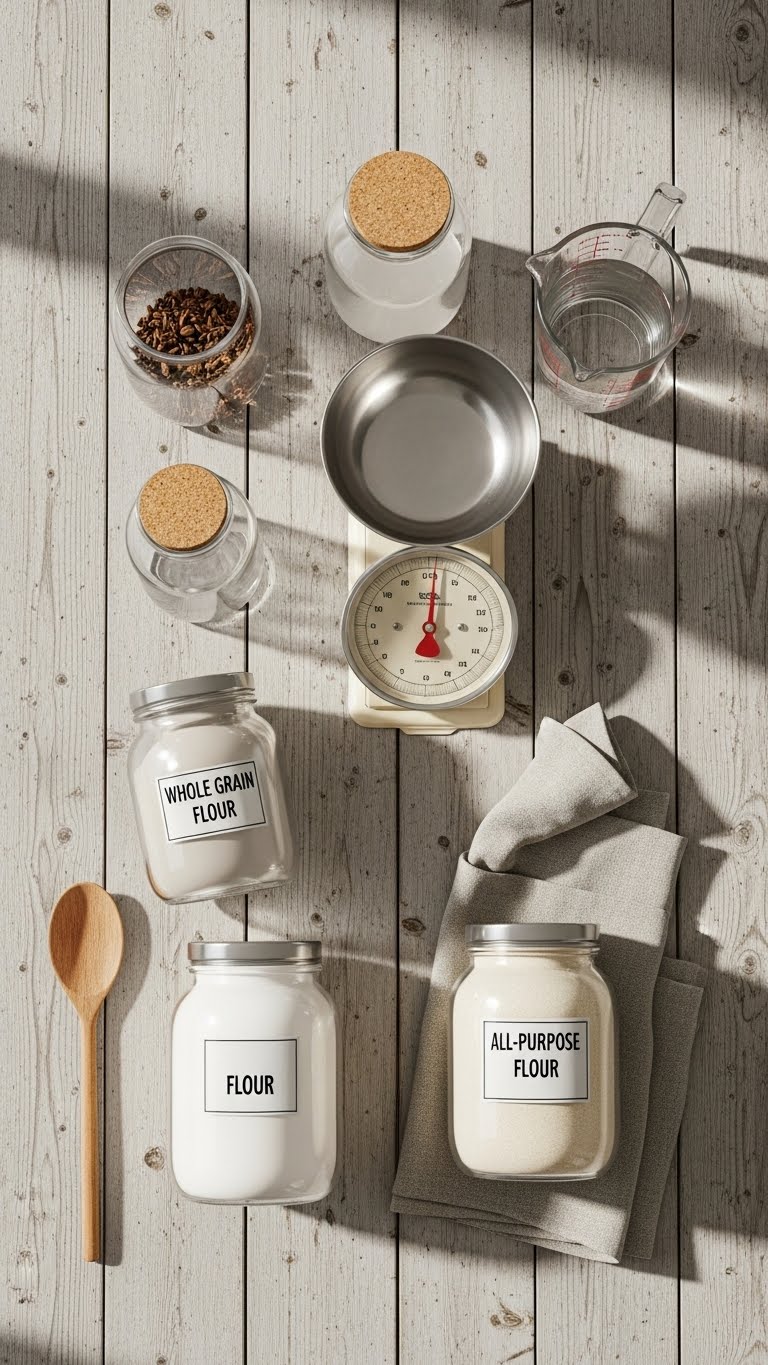
- Ingredients: filtered water, unbleached all-purpose flour, optional whole-grain flour (rye or whole wheat).
- Tools: kitchen scale, airtight jar or jar with loose lid, wooden spoon, clean cloth.
- Timeframe: plan for at least 3–7 days of routine changes to notice less hooch.
Tips:
- Use room-temperature water (about 70°F / 21°C).
- Switch to a mix with 20–30% whole-grain to boost activity.
- Keep a small, active jar for daily feeding; store backup jars in the fridge.
Getting Started: Feeding Schedule to Reduce Hooch
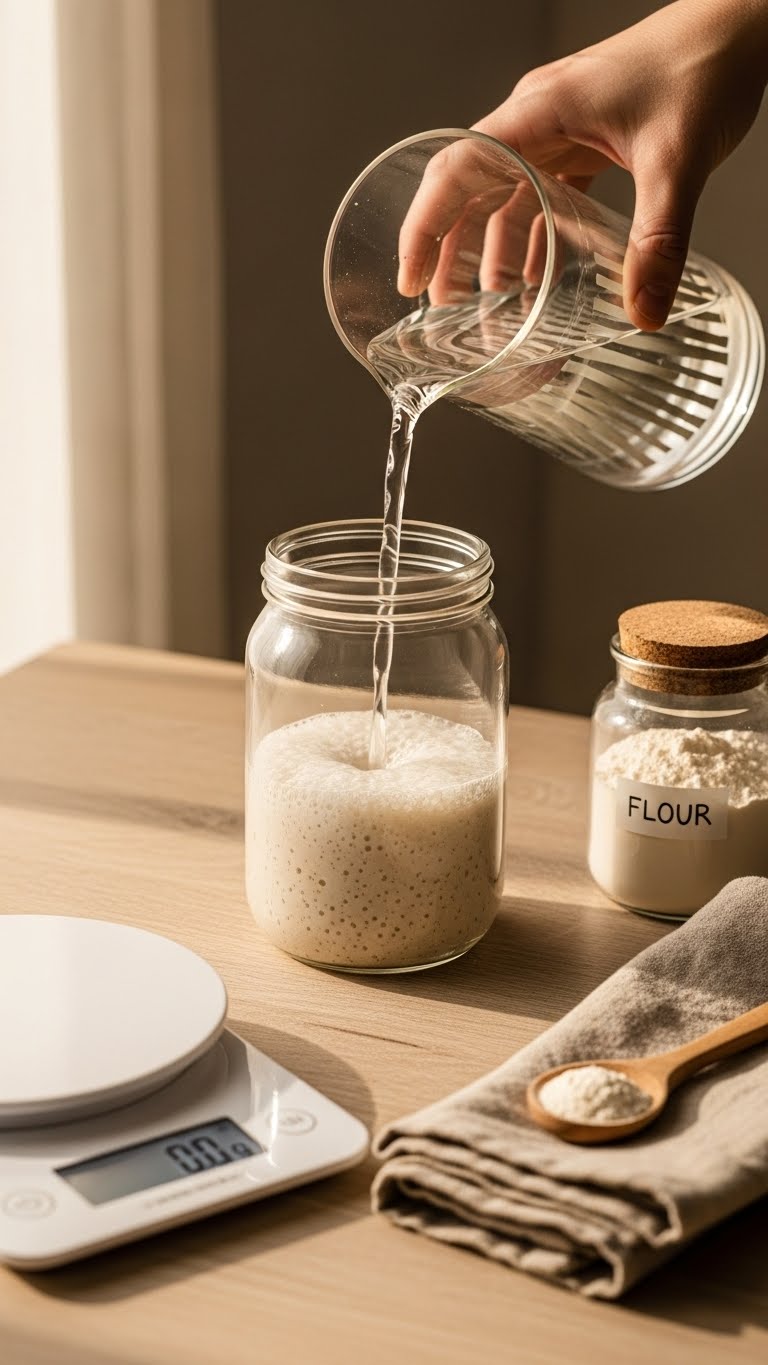
Consistent feeding is the quickest way to reduce hooch in your sourdough starter. Hooch forms when yeast runs out of food. Feed before the starter goes completely flat.
- Discard down to 30–50 g of starter.
- Feed with 30 g starter : 60 g water : 60 g flour (1:2:2 ratio) for a thicker, more vigorous mix.
- Let it sit at room temperature until it peaks, usually 4–12 hours depending on warmth.
If your starter is very weak, feed twice a day for 2–3 days. That builds strength and curbs hooch.
Technique Step-by-Step: Habits That Prevent Hooch
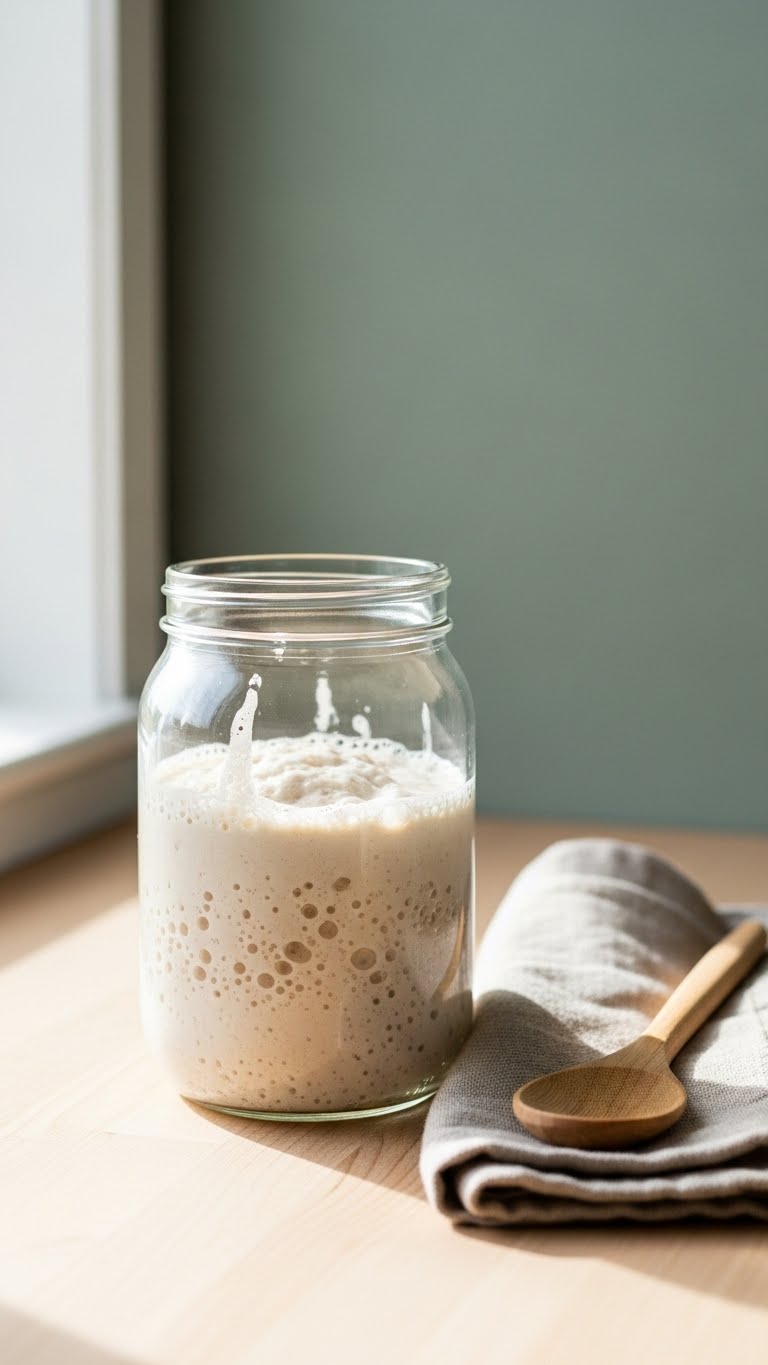
- Thicken the starter: Use a 1:2:2 or 1:3:3 ratio instead of 1:1:1. Thicker consistency slows alcohol separation.
- Keep it warm: Aim for 70–75°F (21–24°C) to encourage activity.
- Feed first thing in the morning if you bake in the evening.
- Use a small jar for active starters so you discard less and refresh more often.
Numbered quick routine:
- Morning: discard to 30–50 g.
- Feed 1:2:2.
- Room temp until peak.
- Refrigerate if you won’t bake within 12–24 hours.
Warnings and pro tricks:
- Don’t stir in hooch; pour it off gently or discard the top layer.
- If hooch smells strongly like nail polish, discard and restart — that indicates contamination.
- Adding a tablespoon of whole-grain flour to each feeding can jump-start yeast.
Troubleshooting Common Issues & Storage Tips
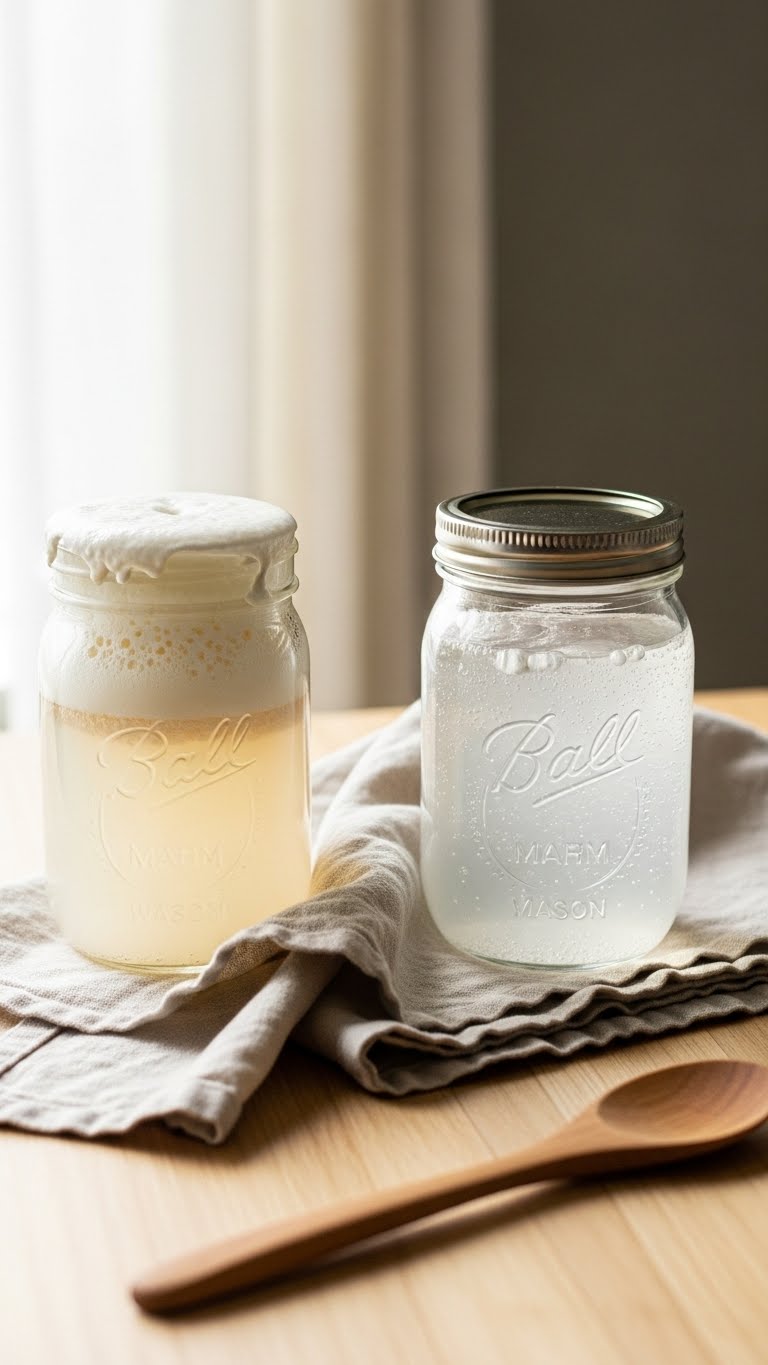
Why does hooch keep coming back?
- Infrequent feeds let yeast starve. Increase feed frequency.
- Warm, high-sugar environments favor alcohol production. Use thicker starter.
- Weak microbiome: feed with a bit of whole-grain flour for 3–5 feedings.
Storage tips:
- Short-term (daily use): keep at room temp, feed once or twice daily.
- Long-term (weekly use): refrigerate after a feed, discard and feed every 5–7 days.
- To revive: take 30–50 g from the fridge, feed twice daily at 1:2:2 until bubbly.
Common mistakes:
- Skipping discard leads to starvation.
- Using chlorinated water can weaken your starter — use filtered or boiled and cooled water.
- Overly thin consistency lets hooch separate faster.
You can reduce hooch in your sourdough starter with consistent feedings, the right ratios, and small storage tweaks. Within a week you'll likely see fewer hooch layers and more bubbles.
Keep this guide handy while you tweak your routine. Pin this guide for your next bake and share it with friends who feed starters. Which tip will you try first?