
You love the look of bakeries on Instagram, but your loaves look plain. Scoring sourdough designs gives your bread that artisan, pin-worthy edge — and you can learn to score sourdough designs in a single session. This guide shows you the tools, timing, and step-by-step scoring patterns so your crusts bloom predictably and photograph beautifully.
You'll learn what to use, how to hold a bread lame, practical scoring strokes, and quick fixes for common problems. Read on and you'll be ready to score sourdough designs for Instagram-worthy loaves this weekend.
What You'll Need (sourdough scoring tools)
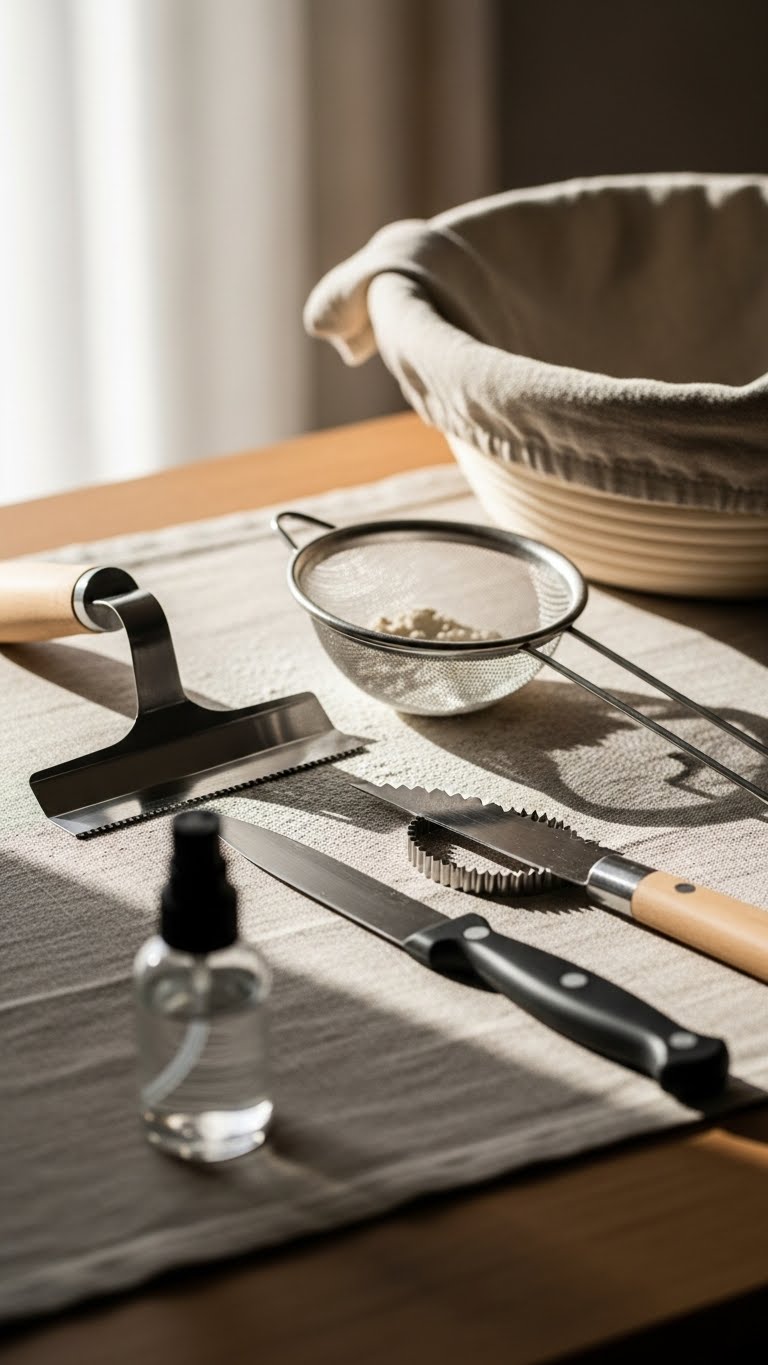
Gather simple, affordable tools before you try to score sourdough designs. You don't need fancy gear — just clean, sharp tools and a tidy workspace.
- Bread lame or very sharp razor (preferred)
- Paring knife (backup)
- Fine, sifted rice flour or all-purpose flour for dusting
- Proofing basket (banneton) and linen
- Digital scale and bench scraper
Quick tips:
- Replace or sharpen your lame blade often — a dull blade drags.
- Dust with a little flour to highlight the cuts on the crust during baking.
- Have your oven preheated to 475°F (245°C) for steam baking.
Getting Started (proofing + shaping tips for clean scoring)
Begin with a well-shaped loaf so scoring creates predictable expansion. Underproofing or overproofing ruins the bloom.
- Shape your loaf with tension; rest in a floured banneton for 30–90 minutes depending on room temperature.
- Use the poke test: a gentle poke should slowly spring back but leave a slight indentation — that's ideal.
- Score immediately after turning the loaf out, when the surface is cool but tacky from dusted flour.
Warnings:
- Do not stretch the dough when transferring — that weakens surface tension.
- Score right before the oven; waiting lets the dough dry and the blade will drag.
The Technique Step-by-Step (how to score sourdough designs)
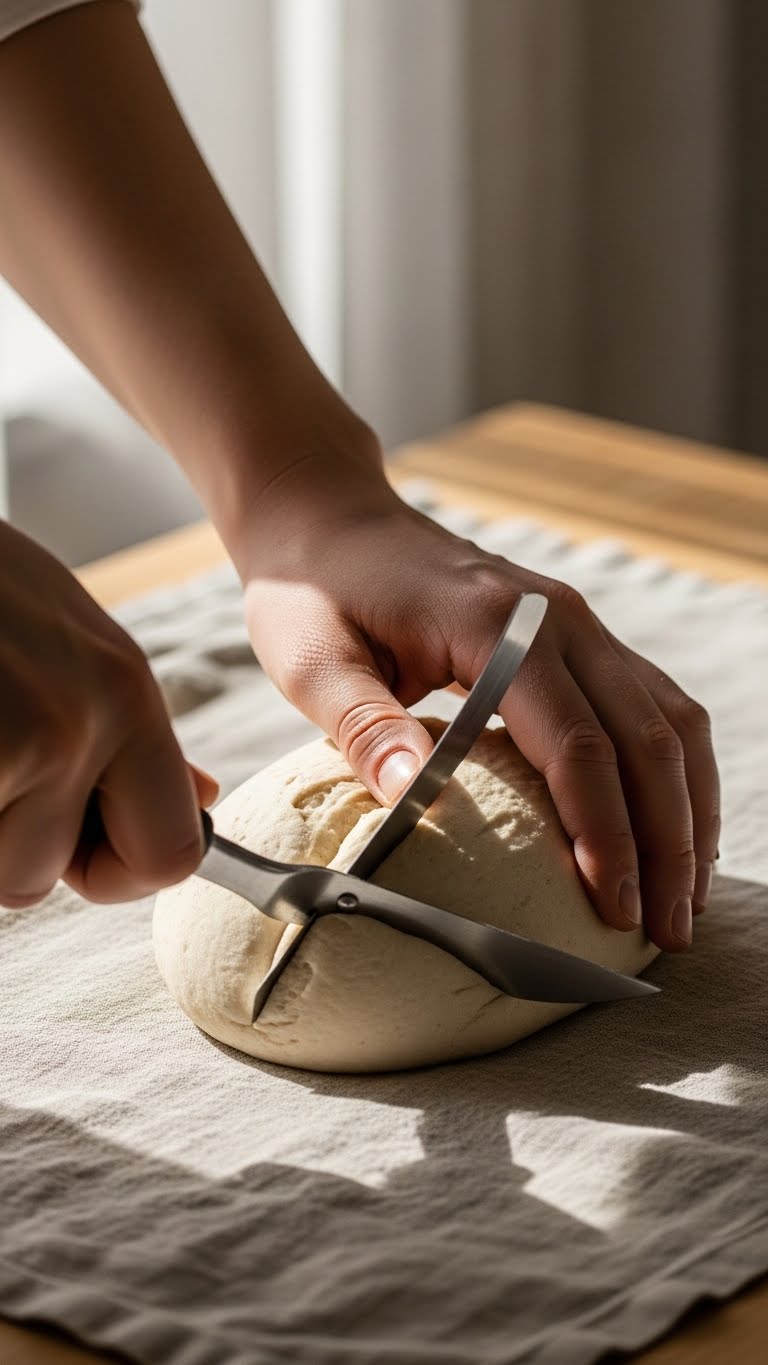
Follow these steps to score sourdough designs that open cleanly:
- Hold the lame at a 30–45° angle for shallow, decorative cuts; use near-vertical for deep oven spring.
- Make swift, confident strokes. Hesitation causes ragged edges.
- Common patterns:
- Single central slash (1–2 cm deep) for rustic loaves
- Wheat/leaf pattern: a shallow curved stem with several small cuts on each side
- Basket weave: parallel slashes crossed at an angle
Step sequence:
- Lightly dust the dough with flour.
- Hold the dough steady with your non-dominant hand.
- Score in one motion; don’t saw.
Pro tricks:
- Practice on a wet silicone mat or unused dough to build confidence.
- For layered blooms, make a base slash, then quick short cuts that end at the base.
Troubleshooting Common Issues (sourdough scoring problems)
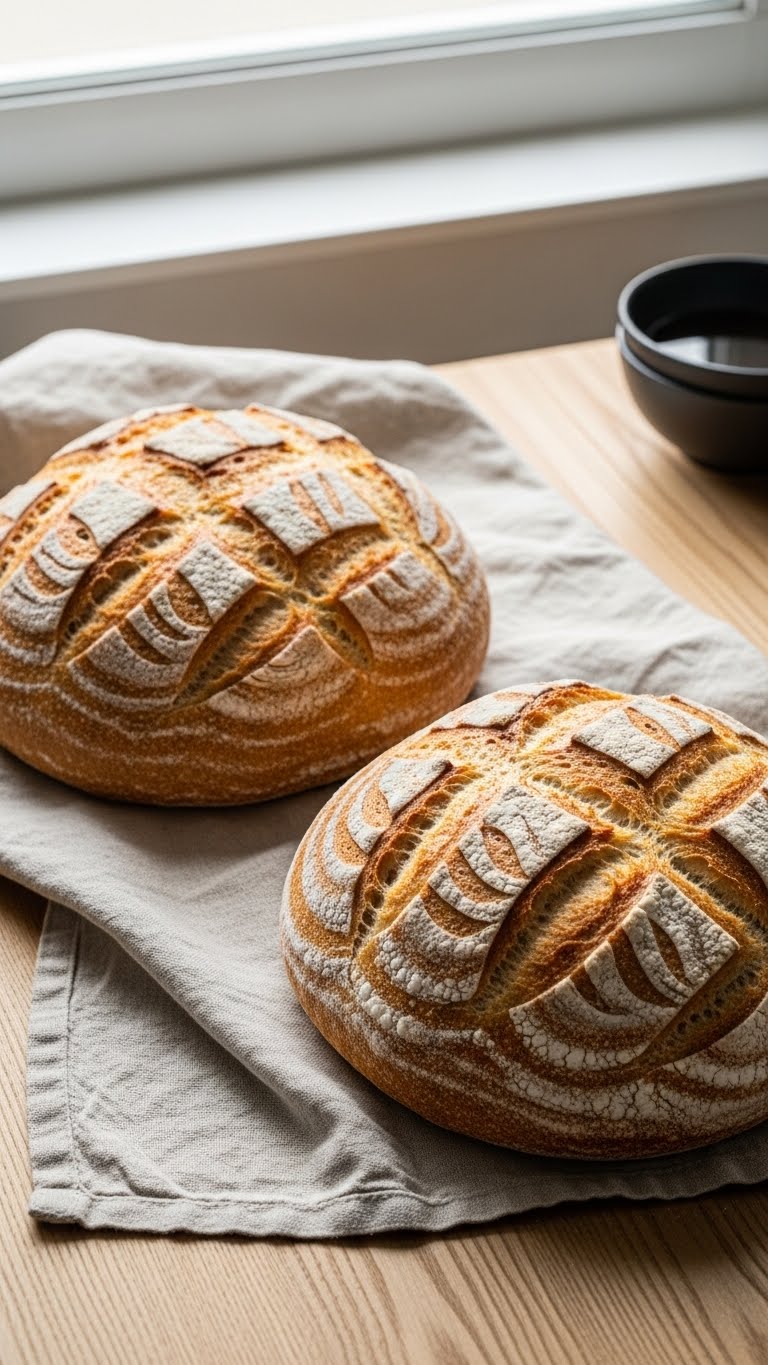
If your cuts close or tear, check these likely causes:
- Dull blade: replace immediately — most scoring issues come from dull edges.
- Overproofed dough: the loaf may collapse instead of blooming.
- Too-deep scores at low angle: the cut rips instead of guiding expansion.
Quick fixes:
- For minor tearing, dust more flour next time to give the blade cleaner contact.
- If the dough is stickier, chill for 10–15 minutes to firm the surface before scoring.
- Use steam in the first 10–15 minutes of baking to keep crust flexible and allow controlled spring.
Creative Variations & Finishing Touches (scoring patterns + styling for photos)
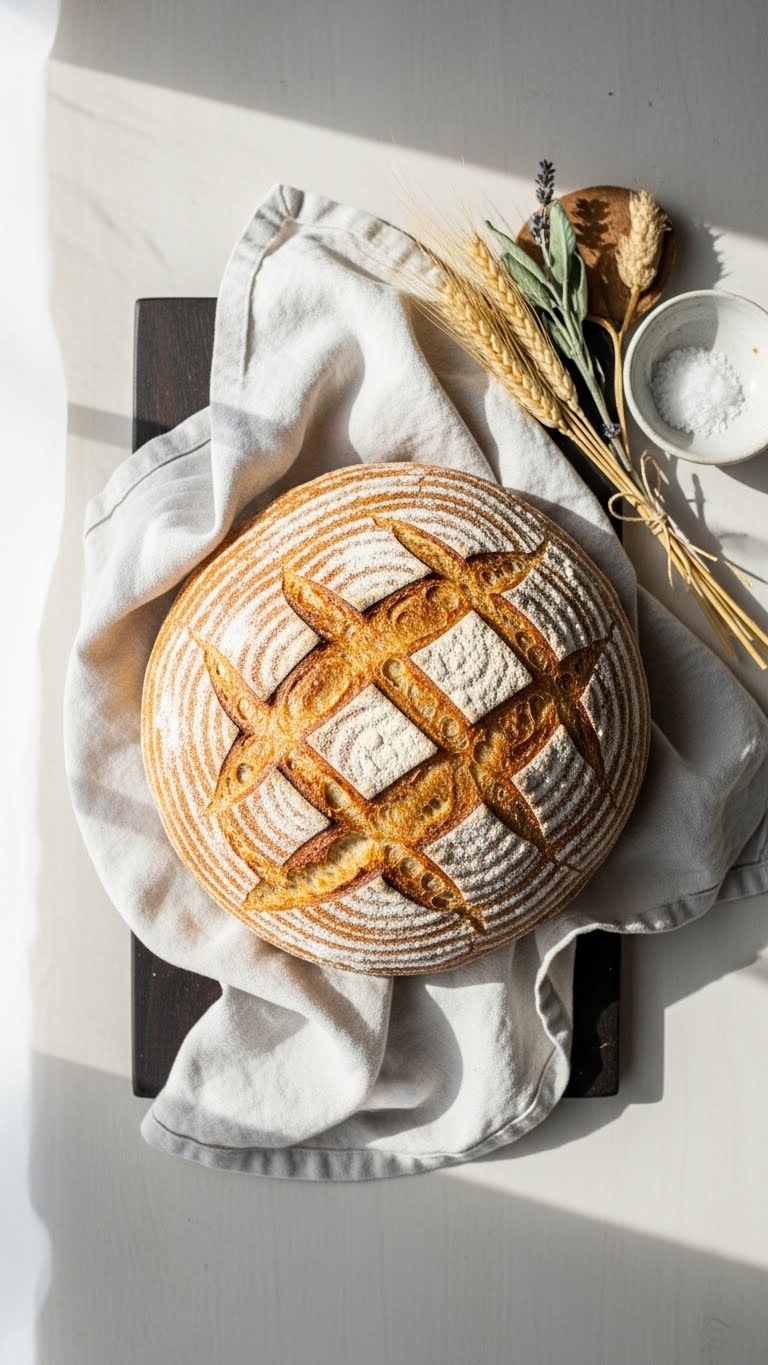
Once you can score sourdough designs reliably, play with patterns and styling:
- Try contrasting dusting: heavier flour around the pattern makes cuts pop.
- Combine shallow decorative cuts with one deeper slash for controlled bloom.
- For photos, use a shallow depth of field, left-side window light, and neutral props to highlight texture.
Storage and make-ahead:
- Bake, cool completely, then slice. Store in a paper bag for 2 days, or freeze slices up to 3 months.
Which pattern will you try first? Practice a simple leaf, then pin this guide and try a more complex design next week.
Pin this guide for your next bake! Save this for later and share with friends who want to score sourdough designs like a pro. Ready to make this happen? Let's do it!