
You’ve shaped a beautiful sourdough boule and now you’re staring at the skin wondering how to get that signature oven spring. If you don’t know how to slash sourdough bread with a lame properly, your loaf can split unpredictably or fail to bloom. Learn a simple scoring routine that gives predictable ears, clean cuts, and dramatic oven spring.
This guide shows exactly what you need, step-by-step scoring motions, and quick fixes for common mistakes. By the end you’ll feel confident scoring every loaf before it hits the oven.
What You'll Need
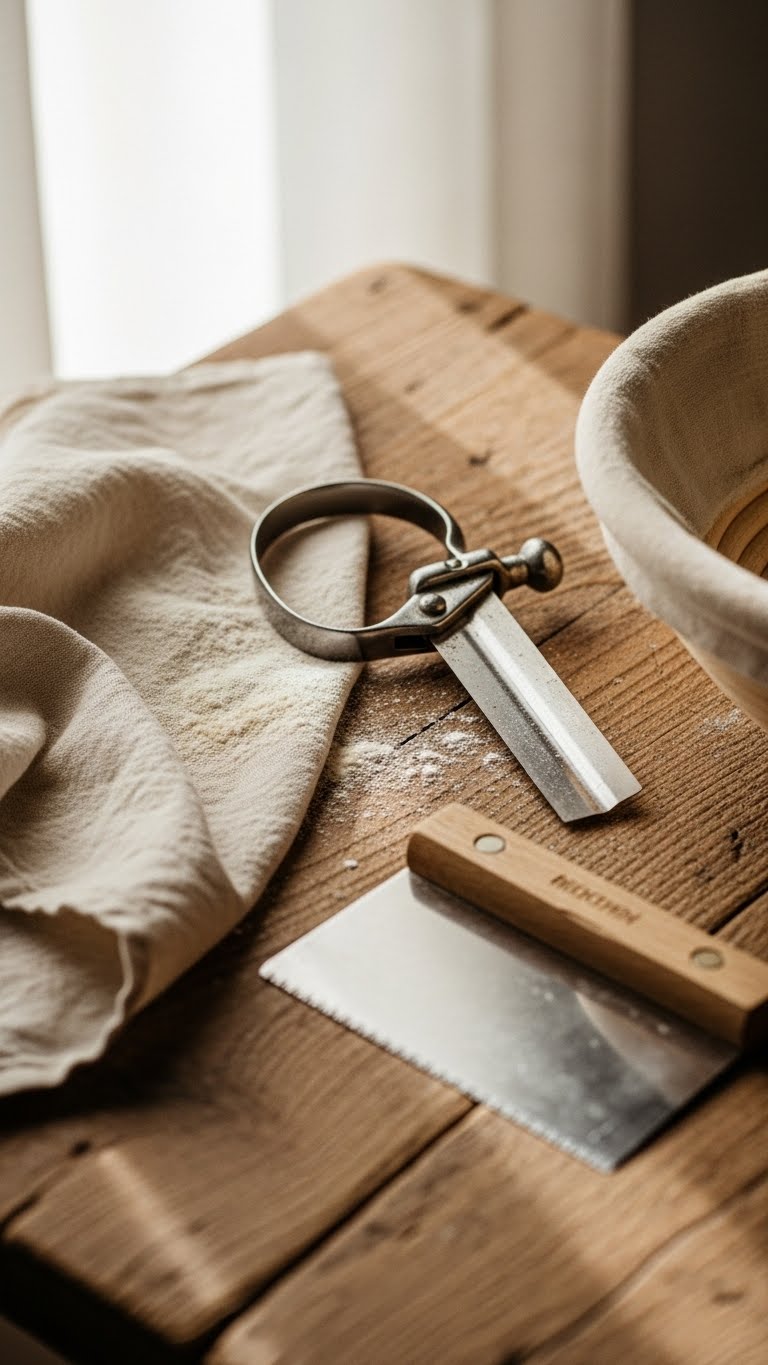
Gather simple tools and props before you score. Having everything within reach prevents shaky hands and wasted time.
- Tools: vintage lame (or razor blade), bench scraper, flour shaker.
- Surface: lightly floured couche or parchment on rustic wood.
- Time: scoring takes 10–30 seconds per loaf.
- Warning: never use a dull blade — it drags and rips the dough.
Quick prep:
- Chill your loaf in the fridge for 30–60 minutes if it’s very soft.
- Dust the top lightly with flour to highlight cuts.
Getting Started: Position and Grip
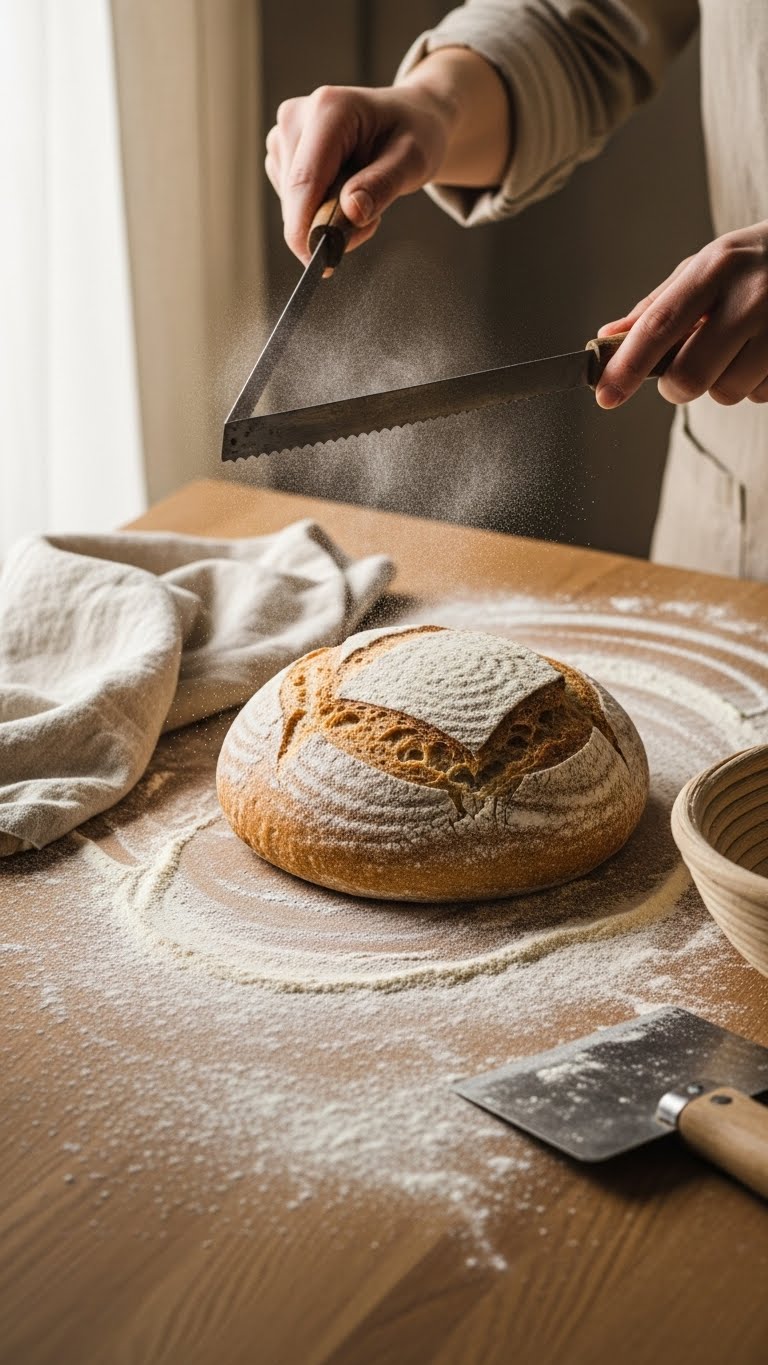
How you hold the lame and position the loaf matters more than force. A calm, steady motion gives the cleanest cut.
- Stand with your body slightly to the side of the oven door.
- Hold the lame like a pen, with a relaxed wrist.
- Angle the blade about 30–45 degrees to the dough surface for an ear-forming cut.
- Keep your non-dominant hand steady near the loaf to prevent slipping, but don’t press.
Practice the motion in the air first. Smooth, decisive strokes beat hesitation.
The Technique Step-by-Step
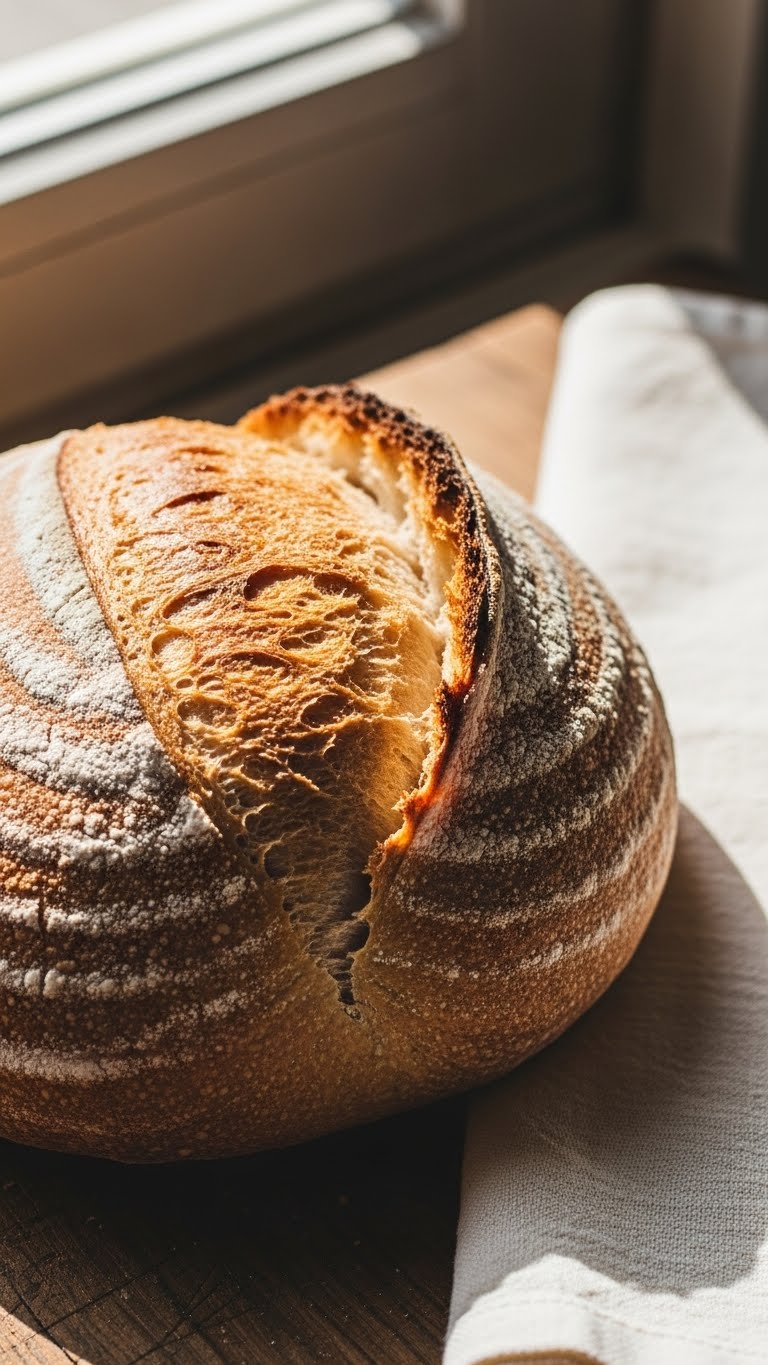
Follow these exact steps to score confidently.
- Decide your pattern: one long slash for a round loaf, a cross for rustic look, or a single curved cut for a pronounced ear.
- Position the blade where you want the cut to start—about 1/4 inch (6 mm) deep.
- With one smooth motion, draw the lame forward and slightly upward at 30–45 degrees. Don’t saw.
- Pull the blade away gently to finish the line cleanly.
Tips:
- For a deep ear, score slightly deeper (1/3 inch / 8–9 mm) and use a steeper angle.
- Make cuts lengthwise for baguettes, and at a shallow angle for decorative patterns.
Troubleshooting Common Issues
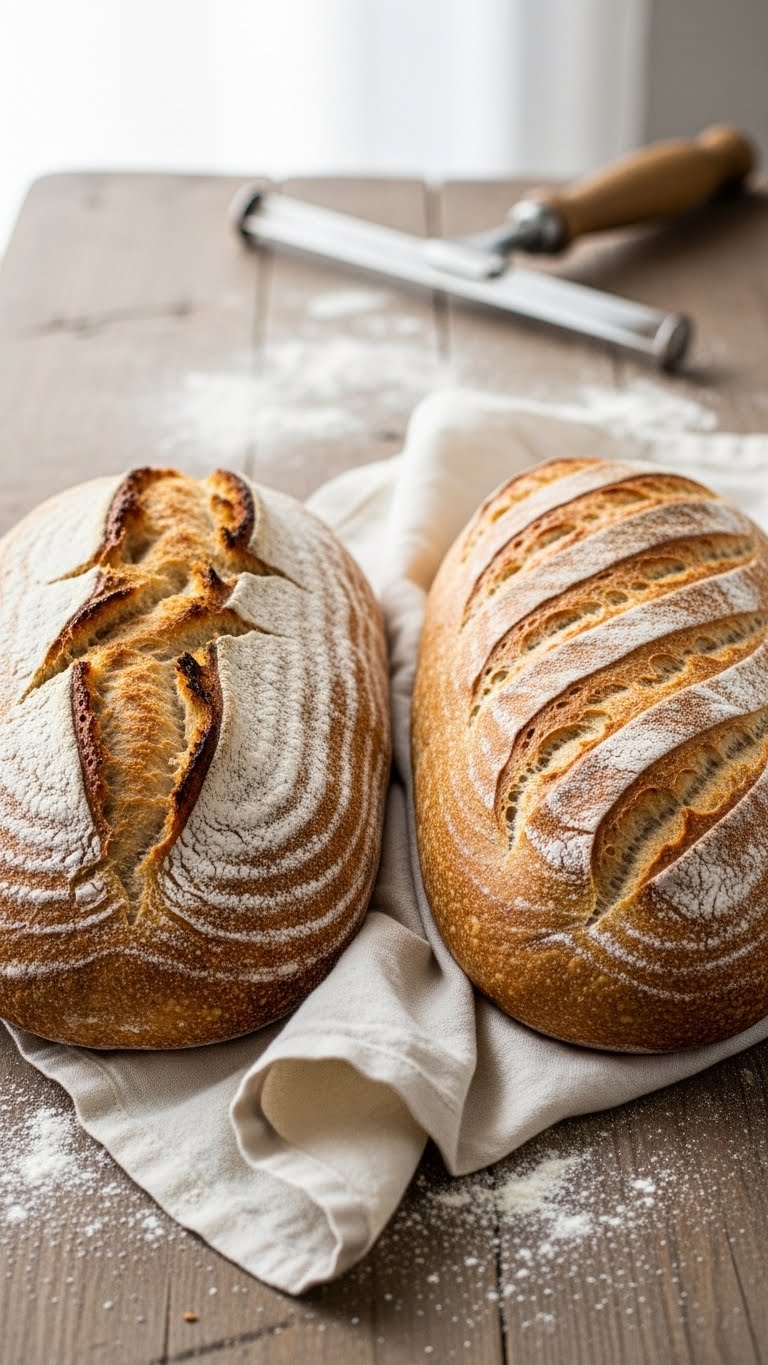
If your loaf splits or the ear won’t form, try these fixes.
- Problem: dough rips or tears.
- Fix: use a fresher, sharper blade and a single decisive motion.
- Problem: loaf doesn’t open (no oven spring).
- Fix: ensure proper proofing—underproofed dough resists opening; overproofed dough collapses.
- Problem: blade drags.
- Fix: dust the blade with flour between cuts or swap blades.
Quick checks:
- Temperature: bake in a 450°F (230°C) oven with steam for best oven spring.
- Proof level: if dough springs back too quickly when poked, it’s underproofed.
Variations and Quick Tricks
Keep your scoring simple until you’re confident, then try variations.
- For dramatic ears, do a shallow cut at one side before a deeper main cut.
- For decorative loaves, use multiple thin cuts spaced 1–1.5 inches (2.5–4 cm) apart.
- Shortcut: use a fresh razor (single-use) if you don’t have a lame.
Small practice session: score 3 practice balls to get the feel—each one takes under a minute.
You’ve just learned how to slash sourdough bread with a lame properly, step-by-step. With a sharp blade, steady hand, and the right angle, you’ll get clean cuts and that beautiful ear every time. Pin this guide for your next bake, try one scoring pattern, and share with a friend who’s learning sourdough. Which scoring pattern will you try first? Ready to make this happen? Let’s do it!